Remembering Sumit Sarkar, a historian who questioned orthodoxy

Professor Sumit Sarkar devoted his life to working with just one exclusive agenda – scholarly excellence. In doing so, Professor Sarkar questioned received wisdom, pushed disciplinary boundaries, and set high standards of critical historical thinking. He taught generations of students for over three decades, between 1974 and 2004, in what was once a highly reputed institution – the History Department of Delhi University. The Department boasted a number of eminent historians as members of its faculty, researching and teaching with complete freedom, whatever the ruling ideology. Indeed, the best histories are produced in the worst of times. Distinguished scholars rise above aggressive political propaganda to publish historical works that provide critical insights into what happened in the past – some lessons from which can shape the present. Scholars like Professor Sarkar did not need to shout like political ideologues and propagandists. Accomplished historians teach what they write and vice versa.
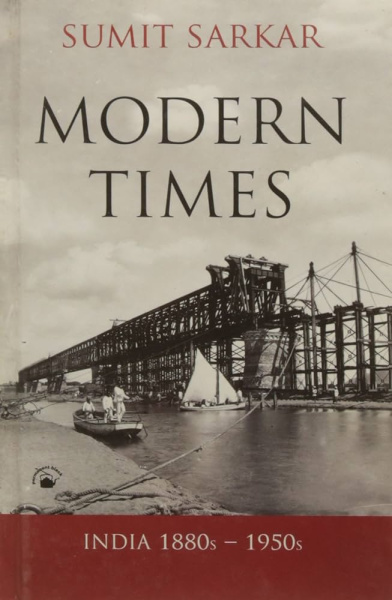
Professor Sarkar commanded respect for his outstanding research and the meticulously produced books he published. For long, his book, Modern India: 1885–1947 (1983), was the veritable career-saving recipe for students. It covered what was the state of the art in historical scholarship, especially on the national movement from the foundation of the Indian National Congress to India’s Independence. The period covered has been criticised by some scholars, even though they know he was not a Congress person, but a critical Marxist scholar who argued his case in the gentlest of forms and styles.
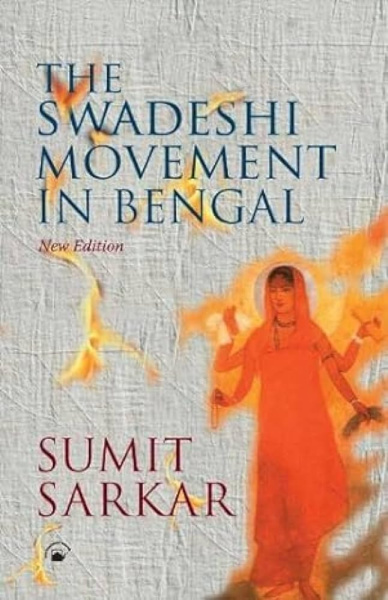
Beginning with his pioneering research on the early twentieth-century anti-colonial Swadeshi enterprise, The Swadeshi Movement in Bengal, 1903–1908 (1973), Professor Sarkar’s many books include Writing Social History (1998) and the edited volume Towards Freedom: Documents on the Movement for Independence in India, 1946 (2007). Much admired, Professor Sarkar’s formidable scholarship can also be savoured in his Essays of a Lifetime: Reformers, Nationalists, Subalterns (2017).
The large corpus of Professor Sarkar’s work offers a detailed critique of the contradictory pulls of social reform and religious revival in colonial Bengal. The humiliation of colonial subjugation was to be balanced with the glorification of India’s ancient past and attacks on the so-called tyranny and oppression of Muslim rule before the British conquest. This meant even the sincerest of reform efforts falling prey to what was subsequently identified as the infamous divide-and-rule policy of the British, besides capitulating to the contradictions between traditional norms and modern transformations. Mention may also be made here of Professor Sarkar’s long engagement with various strands of subaltern activism and nationalist interventions, as the foremost scholar of the Swadeshi movement in Bengal, with a lapsed association with the critical Subaltern Studies scholarship of the 1980s and 1990s. Sarkar’s acknowledgement of his intellectual debt to E.P. Thompson is also well known. Back in 1982, he wrote in the Preface to the first edition of Modern India: this work “explores, in the light of my own research interests, the possibilities of a ‘history from below’ as distinct from the usual tendency in the historiography of Indian nationalism to concentrate on the activities, ideals, or factional manoeuvres of leaders”.
The much-touted Bengal Renaissance, therefore, was an intellectual movement of a “false consciousness of pathetic kind”, which was bred by colonialism.
Commenting on intellectual leadership, in one of his provocative essays, Professor Sarkar pointed out that Raja Rammohun Roy’s writings and activities signified a break with tradition, but a close investigation of the precise extent and nature of the departure reveals that it was constrained by a Hindu-elitist and colonial framework. The much-touted Bengal Renaissance, therefore, was an intellectual movement of a “false consciousness of pathetic kind”, which was bred by colonialism. Beyond laudatory rhetoric, it did not lead to basic social transformation in a progressive direction in Bengal’s development, which, indeed, saw a break from the level playing field of the early modern era to “the full blast of colonial modern exploitation”. The march to modernity eventually slid into conformity with caste rules to the extent of Rammohun taking a Brahman cook with him to England, wearing sacred threads to the end of his days, hunting for ancient texts glorifying ascetic widowhood even if for the noble intention of countering Sati, and engaging in other deeply flawed actions that revealed contradictions between theory and practice.
In effect, it meant the complete abandonment of the older Persianate-Islamic intellectual framework to embrace a neo-Hindu revivalism induced by an almost blind acceptance of colonial subjection. These limits, contradictions, and ambivalences are not taken into consideration in the usual celebration of Rammohun as the father of modern India. Yet, it must be recognised that it took a nearly century-long reform struggle to eventually banish Sati and allow widow remarriage. As Sarkar succinctly puts it, the Hindu tradition always combines “a very considerable degree of abstract intellectual freedom with insistence upon rigid social conformity, and Rammohun and the early Brahmos on the whole maintained this dichotomy”. Himself a Brahmo, it needed guts to say what Professor Sarkar did.
Professor Sarkar’s writings also present a complex picture of the caste question. Combating ambivalence over equality and the social and scriptural justification of discrimination and hierarchy (adhikarbhed) in society, marginalised but politically assertive communities such as Namsudras, Mahishyas and Rajbansis came up with their own vernacular histories articulating their identities. Namsudras protested against being condemned as Chandals, for the latter were identified as descendants of a Brahmin woman who produced children through sex with a Shudra man. They imagined themselves the other way round and in a better position: descended from intercourse between a Shudra woman and a Brahmin sage. Further, Mahishyas refused comparisons with Namsudras, pointing to upper castes having had water from their hands – the bottom line identified as jalacharanya! Also, the Rajbansi upper crust claimed Kshatriya status, rejecting any connection with the tribal group Koch and purging their customs of “non-Aryan” modes and antecedents.
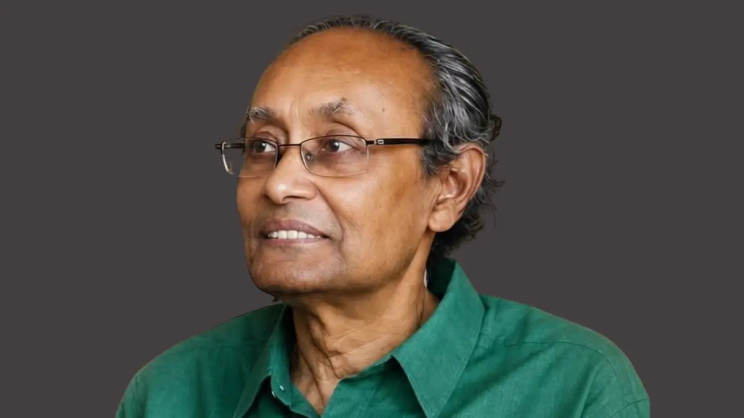
Concerns over communal or identity politics led to Professor Sarkar’s well-known distancing from the Subaltern Studies Collective, of which he had been a founding member ever since a night-long discussion with the Collective’s father figure, Ranajit Guha, in 1977. Professor Sarkar’s discomfort with majoritarian aggression is to be seen in several writings, including a book with his partner Tanika Sarkar, along with Tapan Basu, Pradip Datta, and Sambuddha Sen: Khaki Shorts and Saffron Flags: A Critique of the Hindu Right (1993). His passing away at a time when the liberal intellectual soul and intricately woven social fabric of the country are being torn asunder is a great loss to the fraternity of concerned scholars, which is deeply mourning the departure of a gentle giant with his calm and reassuring demeanour and modest style – something of a role model for his modern India scions or heirs to follow.
Raziuddin Aquil is Professor of History at the University of Delhi.
Send your articles for Slow Reads to slowreads@thedailystar.net. Check out our submission guidelines for details.
The unfinished histories of Partition
In conversation with William Dalrymple / ‘Britain didn't conquer India’
Sheikh Mujib’s killing: What the newspapers told and what they omitted
Mirrors of Empire / The bureaucrats and intellectuals who shaped the Mughal Empire
To feel Bengali, to think beyond Bengal: Dipankar Gupta in conversation
Bangladesh's visual history / The enduring allure of vintage photographs
The enduring legacy of the 2nd Bangladesh Liberation War Course
In conversation with Harbans Mukhia / Beyond kings and dynasties: Rethinking medieval Indian history
Reading Ardhakathanak / What a 17th-century merchant's autobiography reveals about Mughal governance