What Rashomon teaches us about truth and human behaviour
PART I: Does Truth Exist?
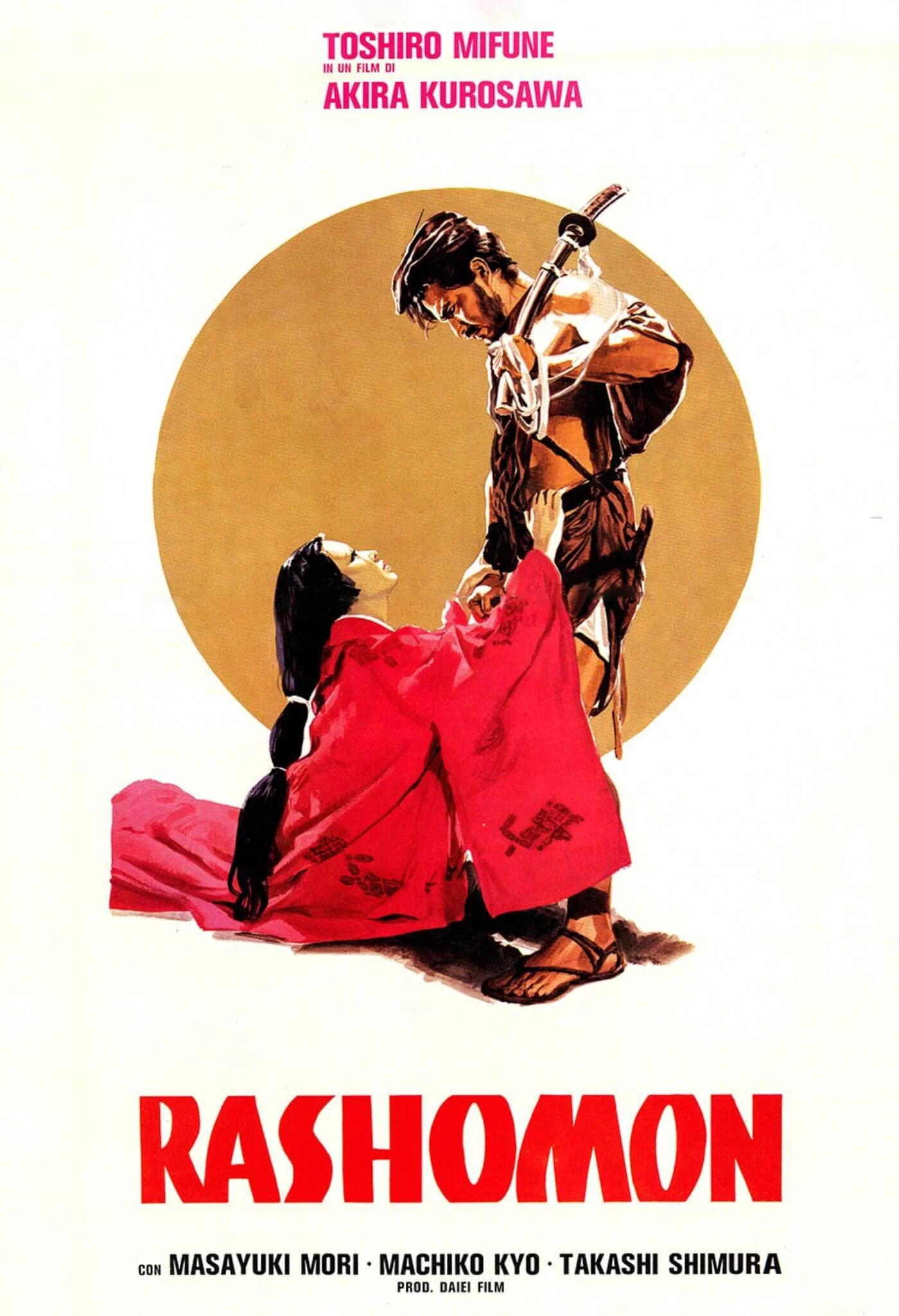
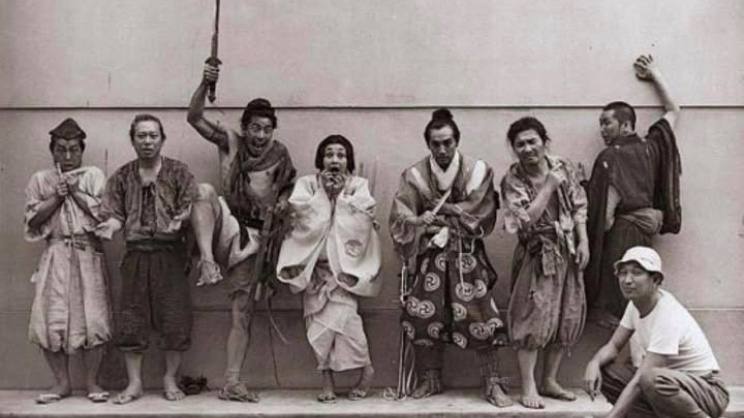
When Akira Kurosawa's Rashomon premiered on August 25, 1950, at the Imperial Theatre in Tokyo, the cinematic adaptation of the two short stories by Ryūnosuke Akutagawa, ‘Rashomon’ (1915) and ‘In a Grove’ (1921), instantly captured the imagination of cinema lovers. Over time, the simplicity within the complexity of Rashomon has added new prisms. The more you watch the movie, the more a new prism emerges, offering a fresher lens.
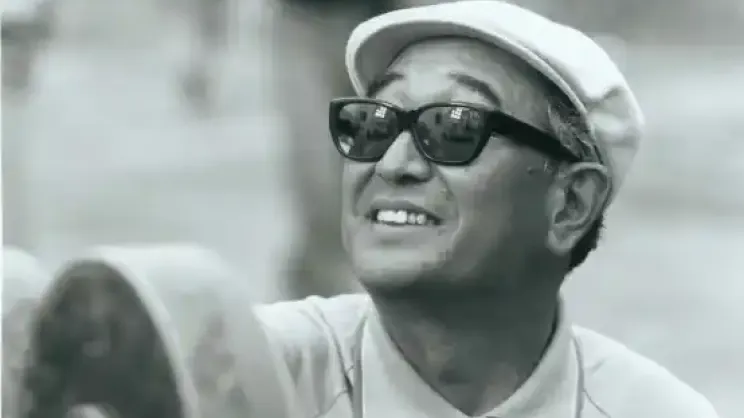
Rashomon's visual imagery went far beyond the innovative technique of cinematographer Kazuo Miyagawa. He pointed his lens directly into the sun to carve light out of the dense shadows. That single stroke of genius laid the foundation for the philosophical appeal that was to follow. We all intuitively know it but, at times, fail to articulate it. Reality is an experience. Objective truth does not exist. Truth, as we perceive it, lies in the grey spectrum between the black and white shades of Rashomon. And yet, the more we explore Rashomon, the more we find that objective truth is subjective. It is never smooth but conflicting, and yet it can be soothing.
PART II: Two Stories in One Tapestry
Akira Kurosawa’s 1950 film masterfully weaves Ryūnosuke Akutagawa's two distinct works into a single tapestry.
The film begins with torrential rain pounding down on the crumbling Rashomon Gate. The decaying Rashomon Gate visualises the physical, economic and moral debris of Japan in 1950, soon after its defeat in World War II. Yet, when Ryūnosuke Akutagawa wrote ‘Rashomon’ in 1915, he was diagnosing a different kind of decay in the Japanese collective experience. Writing in the wake of the Meiji Restoration, Akutagawa reflected on the evaporation of traditional ethics that had formed the foundation of a samurai feudal institution that had held society together for centuries. This cultural shift created a moral vacuum in which honour and chivalry were replaced by raw greed and cold individualism that emerged as by-products of aggressive modernisation and rapid economic growth.
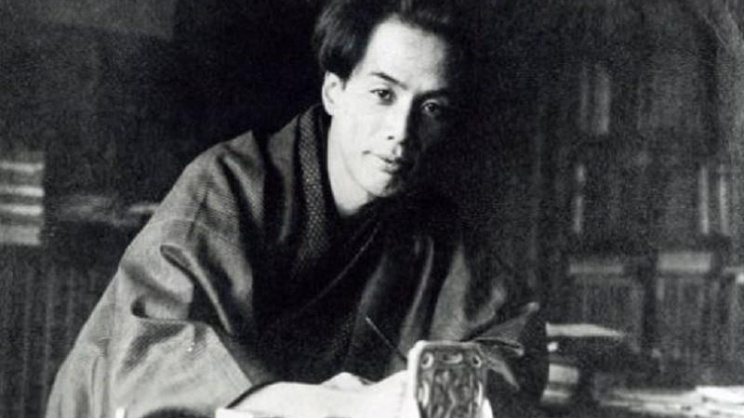
Ryūnosuke Akutagawa's ‘In a Grove’ (1921) provides the narrative engine for the film. Set in 12th-century Japan, the story centres on a single event. A samurai has been murdered. This is the only objective truth. In Akutagawa's original, there are three protagonists in the murder: Takehiro, the Samurai; Masako, the Wife; and Tajōmaru, the Bandit. A Woodcutter is a silent witness to the events that follow. He does not enter into Akutagawa's narrative. Akira Kurosawa gives the Woodcutter new life in the film. He becomes a neutral observer.
The plot is now ready. The curtains open.
PART III: The Story Starts
The film opens with torrential rain pounding on the ruined and decaying Rashomon Gate in 12th-century Kyoto.
A Woodcutter is staring into the rain. He repeatedly says, ‘I don't understand. I just don't understand.’ Why is he so deeply shaken? He was the one who found the body of the dead Samurai (Takehiro) in the forest.
A Priest sits silently with the Woodcutter. He saw the Samurai (Takehiro) and his Wife (Masako) travelling together on the road. Later, the Priest attended the Magistrate's trial. Like the Woodcutter, he is also shattered. The lies told at the trial revealed to him a corruption of the human soul far worse than the wars, famines and fires that periodically plagued medieval Japan.
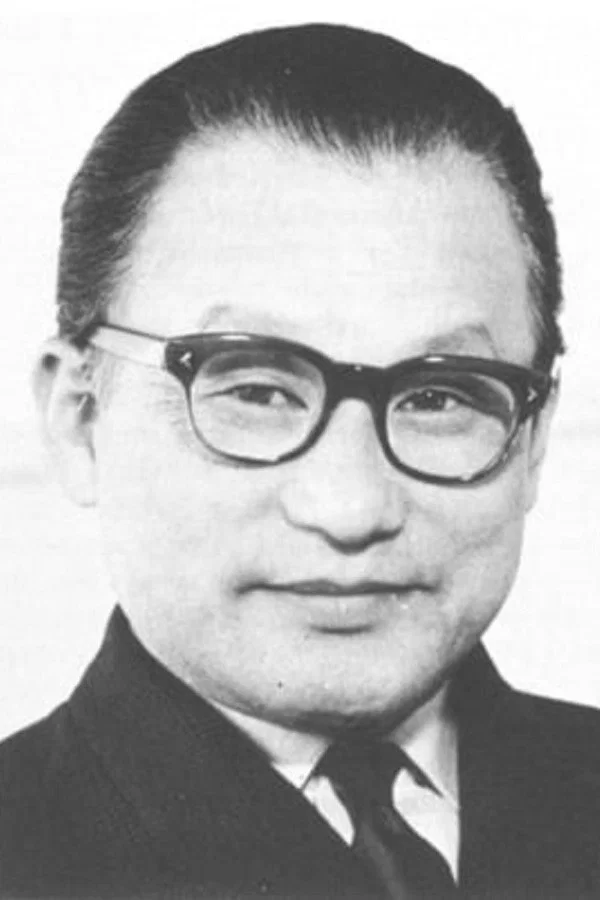
A Commoner takes shelter from the rain. Seeing the Woodcutter and the Priest, he wants to know more about what is troubling the other two. The Woodcutter and the Priest begin to narrate what they witnessed at the Magistrate's trial. The story begins. Akira Kurosawa takes us to the forest, where Kazuo Miyagawa points his magical lens directly into the sunlight filtering through the forest.
PART IV: The Mirage of Truth
When the protagonists recount the incident, their testimonies are shaped by subjective self-interest. Each witness filters the crime through their own psychological needs.
Tajōmaru (the Bandit) frames his duel with Takehiro as a heroic battle to preserve his fearsome reputation. Masako (the Wife) casts herself as a helpless victim of circumstances to preserve her virtue within a strict Samurai society. Takehiro (the dead Samurai) speaks through a spirit medium to claim that he committed honourable hara-kiri. His sense of honour as a Samurai prevents him from admitting that he died an unheroic death.
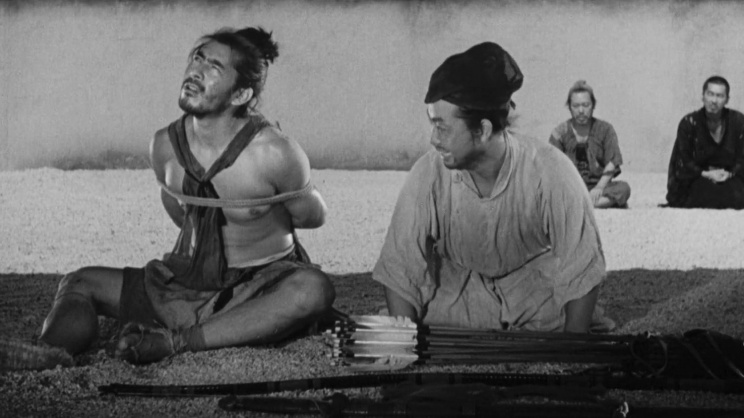
The Woodcutter, who was left as a minor character in Ryūnosuke Akutagawa’s story, is elevated by Kurosawa to reveal an additional layer. Telling his story to the Priest and the Commoner, the Woodcutter strips away the grand mythmaking of the first three accounts. It was actually a nasty, clumsy fight between two terrified men, aggravated by the presence of a desperate woman.
Yet the Woodcutter is not a neutral observer either. His account is also biased and shaped by subjective self-interest. The Woodcutter withheld key details from the Magistrate because he had stolen the Samurai’s gem-studded dagger. By adding this fourth perspective, Kurosawa delivers his most devastating insight. Even seemingly neutral bystanders distort the truth to protect their own self-interest and self-image. One objective truth has four subjective objectivities in Rashomon.
PART V: Rashomon: Through Behavioural Lenses
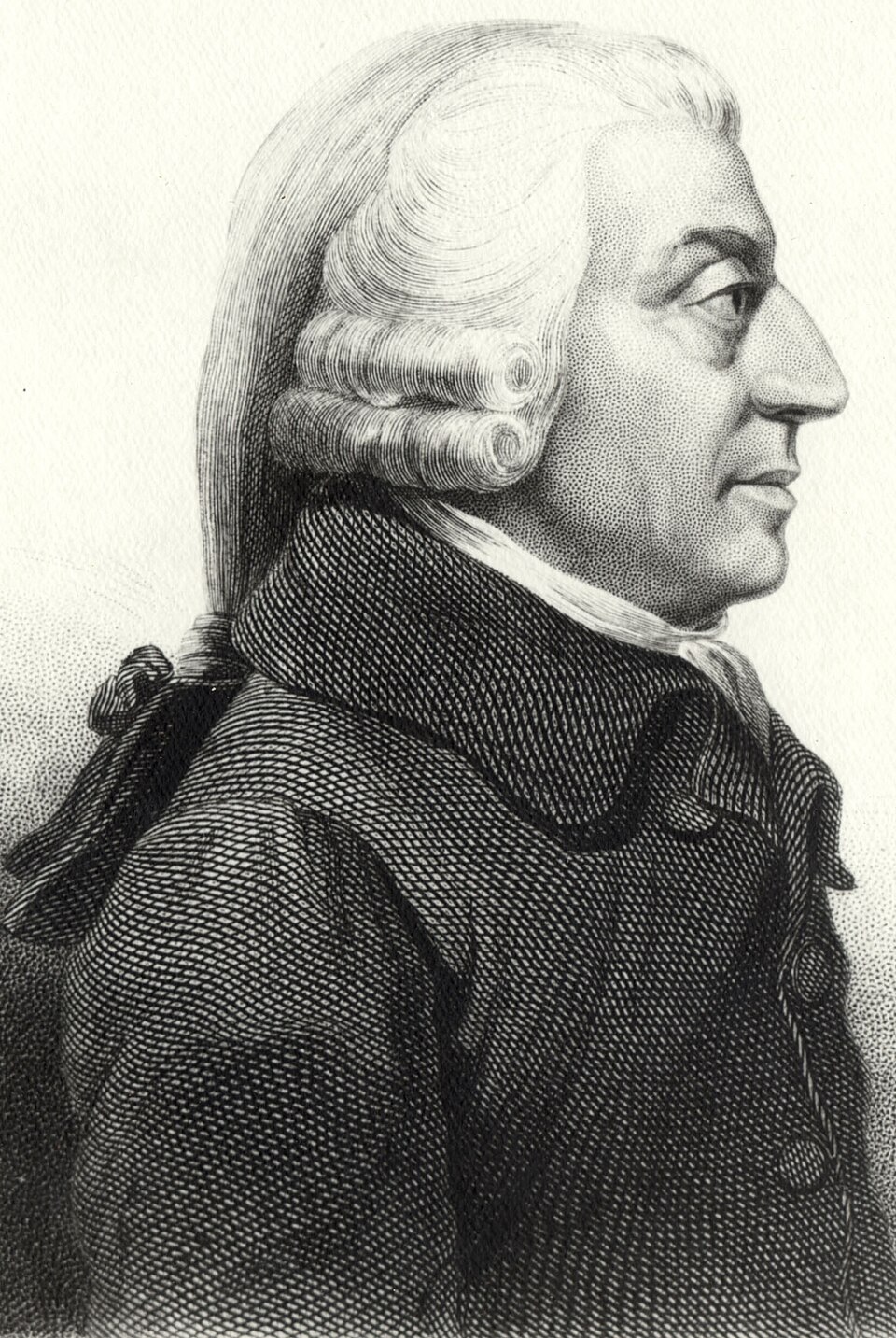
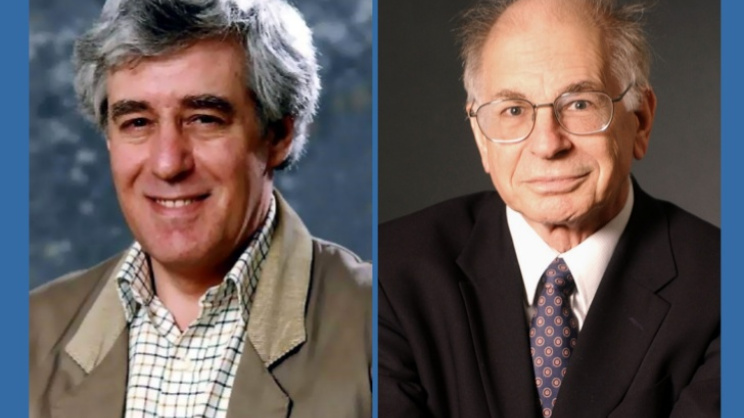
Ever since the days of Adam Smith and The Theory of Moral Sentiments (1759), economists have known that humans are rational, but not entirely so. They even coined the term Homo economicus to justify their models of optimisation. Humans are Homo sapiens. Their rationality is imperfect. It is limited because the brain has limited cognitive ability. Herbert Simon first formally established this in 1955. He coined the term bounded rationality. Because of limited cognitive ability, the brain resorts to mental shortcuts (heuristics). In 1974, Amos Tversky and Daniel Kahneman showed that heuristics can lead to systematic errors. Because of heuristics, when the brain opts for a mental shortcut, it leaves out other elements that are relevant to understanding an environment. When the brain systematically focuses on a particular aspect, it makes errors known as biases. This process leads to clouded perception.
The story does not end here. Humans intentionally cloud their perception. They do so out of self-interest. When a single person or a single group makes this error, we establish one narrative. When different groups make different systematic errors, we get different narratives of the same absolute.
Why does this happen?
In 1979, Amos Tversky and Daniel Kahneman introduced Prospect Theory. When we observe reality, we all observe the same event. That event is our focal point, like the origin of a graph. We navigate ourselves in reference to that same focal point. However, that same absolute focal point is relative. Due to limited cognitive ability and differing self-interests, each one of us sees and frames reality in our own way. We develop different perceptions of the same absolute. Truth is never objective. Truth is subjective objectivity.
How does Rashomon fit in with Behavioural Economics?
The Samurai, the Bandit and the Wife all experience the same absolute—the Samurai dies in the forest. The Woodcutter is a neutral observer. Yet, because of self-interest and limited cognitive ability, they all present a narrative that serves their own interests. They present a narrative that preserves their own image.
Like the blind men, the four protagonists observe the same elephant from different focal points. They develop their own narratives. We all see and experience the same sunset, but we never perceive it in the same way. The musician sees the sunset through notes, while the poet sees it through metres of words. The photographer sees it through light and shade.
And thus, there is no objective truth. And thus, all truth lies somewhere between the black and the white of Rashomon, in a shade of grey.
PART VI: Not All Is Gloomy in the End
Ryūnosuke Akutagawa and Akira Kurosawa leave the viewer more confused than ever. They both portray decay. And yet, at the end, there is hope.
A mother has left behind a crying baby. The baby has been left with a precious amulet for protection. The Commoner steals the amulet to sell it. When the Woodcutter protests, he now sees the event in a different light. The Commoner flees. The Woodcutter decides to take the baby home. He has several children. Raising one more will not be a burden.
As we transform from one reality to the next, our perceptions change. And with these changes, our personas also change.
Amid all the confusion, decay and self-interest, empathy wins in the end. Through all the different narratives, Akutagawa and Kurosawa's Rashomon gives us different shades to look at and different perspectives to look from. That gives us variation. Life would be monotonous in either black or white. Life exists in shades of grey. Seventy-six years later, Rashomon shows that even if truth is subjective objectivity, subjectivity adds new colours to the rainbow each time we look through a special lens like that of Kazuo Miyagawa. Rashomon remains one of the greatest films ever made.
Asrar Chowdhury is a Professor of Economics at Jahangirnagar University. He is the anchor of Alape Arthanity, a Bangla podcast sponsored by Kazi Farms and broadcast by Deepto TV. Email: asrarul@juniv.edu
Send your articles for Slow Reads to slowreads@thedailystar.net. Check out our submission guidelines for details.
How Milad-un-Nabi shaped Muslim cultural life in colonial Bengal
Why Chittagong never became a maritime city
The many worlds of Ghulam Murshid

Operation Jackpot: How Bangladesh’s naval commandos struck at Pakistan’s lifeline in 1971
The Yellow Butterfly: How Sheba shaped my world growing up

What Bangladesh’s historic Test victory in Australia means for Bangladeshi-Australians
Remembering Sumit Sarkar, a historian who questioned orthodoxy
The unfinished histories of Partition
In conversation with William Dalrymple / ‘Britain didn't conquer India’