Gibbons, kingfishers and the changing world of Adampur Reserved Forest
A return to Adampur Reserved Forest in the hills of Moulvibazar is more than a wildlife survey. It is a journey into memory—and an unsettling encounter with a forest quietly changing.
The promise I carried back
Some forests stay with you long after you leave them. Adampur was one of those forests.
Possibly during Ramadan in August 2012, I found myself in Moulvibazar with a particular destination in mind: Adampur Reserved Forest, part of the Rajkandi Hill Forest under the Moulvibazar Forest Division of the Bangladesh Forest Department. I had first heard about Adampur from Tania Khan and her husband, Munir Khan, who was then a forest ranger. Neither had a formal degree in biology or zoology, but both were remarkable self-taught naturalists. Their real education had come from years of walking through forests, observing wildlife and patiently recording what they found. They had made numerous records of mammals, birds, reptiles and amphibians and, through their field experience, knew many corners of the forests of Greater Sylhet intimately.
They offered to take me to Adampur, and I readily accepted. As it was Ramadan, I was not particularly concerned about food. When they suggested leaving at around 8:00 in the morning, I was ready.
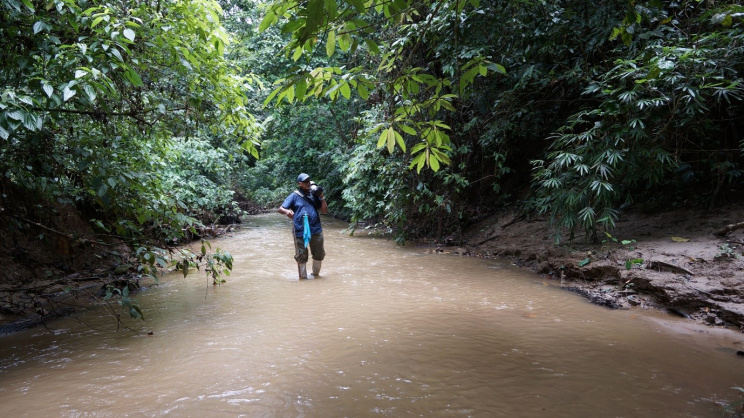
We travelled by a three-wheeler, locally known as a CNG, and after nearly two hours reached the forest office at the entrance to Adampur. From there, the journey became a real forest expedition. We entered the forest and followed a chhara, the local name for the hill streams that criss-cross the forests of Greater Sylhet. The monsoon had filled the streams, and walking meant constantly negotiating water, rocks, mud and slippery banks.
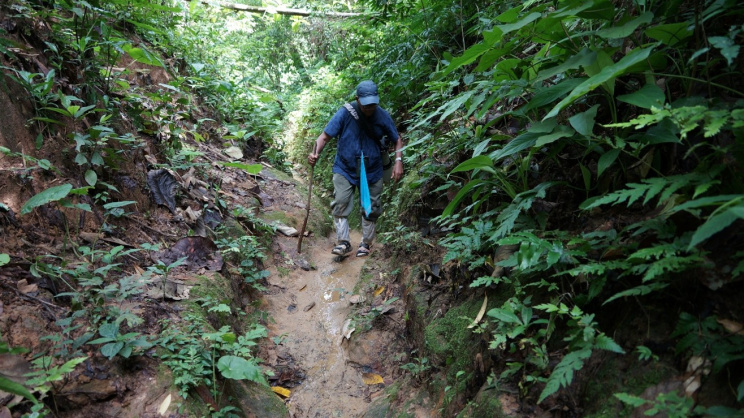
Whenever a bird appeared, we stopped. Cameras came out, telephoto lenses were raised and the forest became a succession of brief encounters: a movement in the foliage, a flash of colour, a call from somewhere above.
By late afternoon, we had covered roughly two kilometres through knee-deep water. We then returned along a forest trail, adding another three kilometres to the day's walk. We recorded several uncommon birds, hoolock gibbons, macaques and a few frog species.
Yet, strangely, I came away dissatisfied.
I had not seen some of the birds and amphibians I had particularly hoped to find in Adampur. The expedition had been worthwhile, but something remained unfinished. As I left the forest, I carried with me a quiet promise: one day I would return.
Thirteen years later
That day finally arrived on 13 August, when I revisited Adampur as one of 14 members of the Updating Faunal Red List of Bangladesh project, initiated by the Bangladesh Forest Department and implemented by IUCN Bangladesh.
I expected memories to come rushing back. Instead, I experienced something more unsettling.
The first thing that struck me was the absence of the rows of tree ferns that used to spectacularly line the banks of the chhara.
I remembered the tree ferns of Adampur. They were among the most distinctive plants I had seen during my earlier visit: tall, lanky and almost alien-looking, with umbrella-shaped crowns. Standing among the forest vegetation, they appeared to have survived from another geological age. They gave parts of Adampur an unmistakably primeval character.
This time, I looked for them almost instinctively. They were difficult to find. The forest was still green. It was still beautiful. It still contained wildlife. But the tree ferns appeared to have declined drastically.
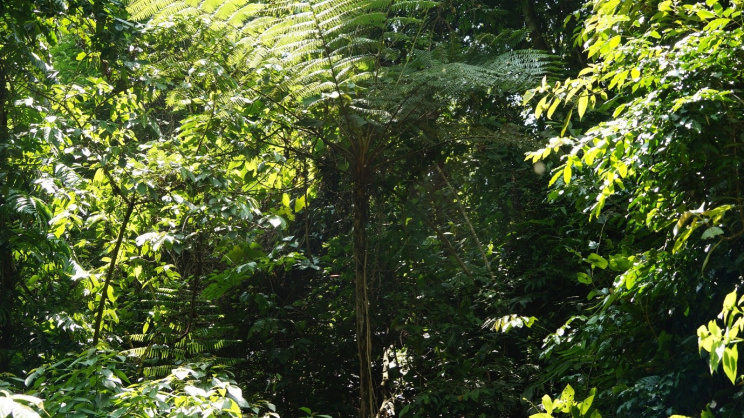
It was a troubling first impression. I wondered what had happened. Was it a change in moisture? An alteration of the canopy? Disturbance? Changes in the streams? Competition from other vegetation? Climate? Or a combination of several factors?
There was no immediate answer. But the observation stayed with me for the rest of the day.
This time, I decided not to repeat the unstable chhara route of my first visit. Carrying three cameras and several lenses while wading through knee-deep water is not the most sensible way to conduct a wildlife survey.
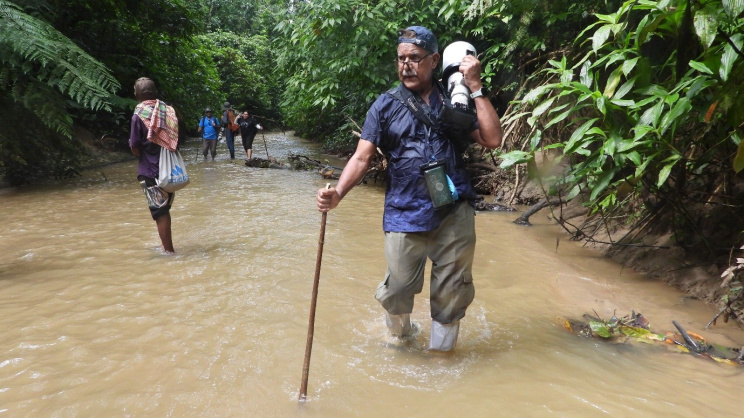
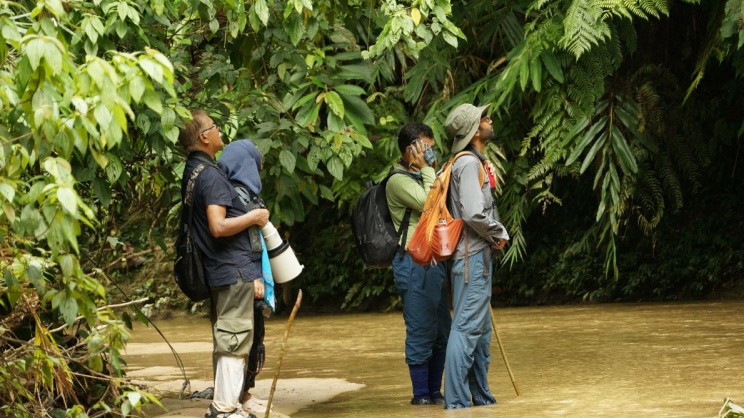
Once our team had assembled, along with two field assistants and three local guides, we set off from nearby Kawar Gola village. Cameras were checked, lenses mounted and notebooks prepared. We had barely begun when Adampur offered us our first prize.
The bird we could not photograph
Someone suddenly pointed towards a tree.
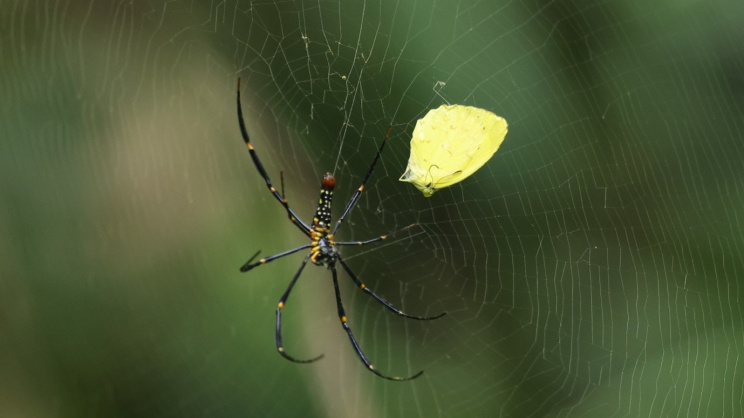
A silver-breasted broadbill (Serilophus lunatus) was perched there, marking what seemed to be the beginning of the older forest. It was a beautiful and relatively uncommon forest bird, and for a moment everyone was excited. Unfortunately, we were not ready.
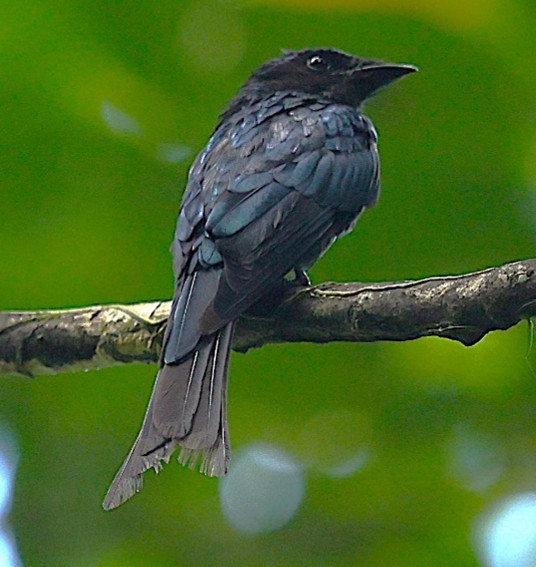
Long lenses were still being adjusted, cameras were being raised, and before we could obtain a single photograph, the bird disappeared. It was an all-too-familiar wildlife experience: the bird appears precisely when the photographer is unprepared and disappears precisely when the camera is finally ready. Our disappointment, however, did not last long.
Someone noticed a large insect resting on a broad leaf of a Syzygium tree. Its size and shape immediately attracted attention.
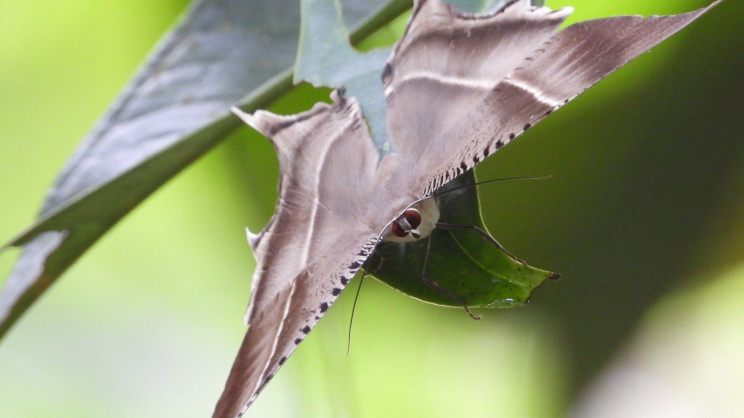
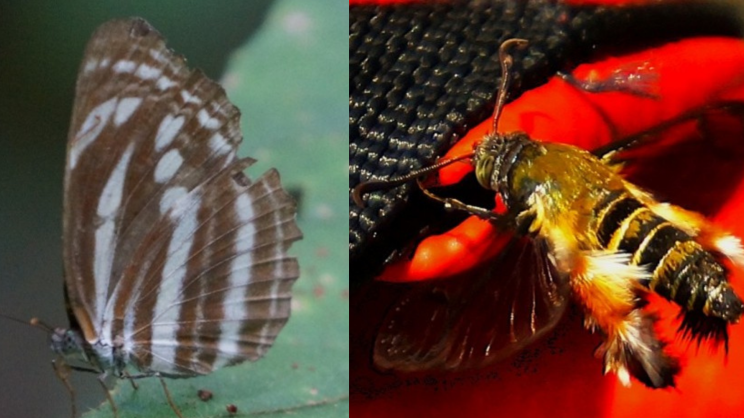
It was Lyssa zampa, the tropical swallowtail moth. Within seconds, cameras and mobile phones were pointed towards it. The moth seemed remarkably cooperative, remaining motionless as we photographed it from almost every possible angle.
It was an impressive creature, with a wingspan reaching about 16 centimetres. Its dark chocolate-brown wings were marked by a clean, striking white diagonal stripe, while its elongated hindwings extended backwards like the tails of swallowtail butterflies. That resemblance gives the moth its common name.
What an incredible encounter it was. For almost half an hour, this extraordinary insect became the star of our expedition. Finding a nocturnal creature completely out in the open during the day is quite rare, as such creatures usually spend daylight hours tightly hidden from predators. Its wings were spread like a dark, open book on the leaf, revealing a world that most forest visitors would probably walk straight past without noticing.
Eventually, we moved on. The forest soon reminded us that fieldwork is not always graceful. While crossing a slippery bank beside a chhara, my sandal lost its grip. I fell before I could regain my balance. Luckily, Rafiq, my regular companion on such trips, immediately came to my aid, while several others rushed over and helped pull me out of the mud. My clothes were dirty, my pride was slightly bruised, but there was one enormous relief: the cameras were unharmed.
For a wildlife biologist and photographer, that counts as a successful recovery.
The gibbons were calling
We had barely recovered from the episode when the forest suddenly found its voice. From several hundred metres away came the loud, rhythmic, high-pitched duet of a pair of critically endangered hoolock gibbons somewhere high in the canopy.
We hurried towards the calls. The gibbons, however, were moving. Their contact and social calls seemed to shift farther away as they travelled through the canopy. We followed as quickly as the terrain allowed, hoping that the forest would eventually reveal them. It did not.
Their daytime foraging route was taking them away from us, and eventually we realised that we were unlikely to see them. We had heard the gibbons but not seen them. That is often how wildlife behaves in a forest. It decides how much of itself it is willing to reveal.
When butterflies hijacked the expedition
Our spirits soon rose again, thanks largely to Professor Monwar of the butterfly group. He had become intensely enthusiastic, running after butterflies with his net. Sometimes he succeeded; at other times, the butterfly escaped at precisely the moment he was about to catch it.
Before long, our wildlife expedition seemed to have acquired an entirely new mission. We had come to document the fauna of Adampur, but Adampur appeared determined to turn us into butterfly researchers. And it worked.
The butterfly team collected and documented more than a dozen species for scientific records, museum collections and DNA barcoding. The range in size and colour was remarkable, from tiny insects with wings of around 10 millimetres to much larger and vividly coloured species.
It was a useful reminder that biodiversity is not always something large enough to be noticed from a distance. Some of the most interesting inhabitants of a forest may be smaller than a fingernail.
A forest built around water
The forest floor remained wet from the early morning rain, but the frogs, toads and reptiles we were hoping to find remained largely invisible. Insects, on the other hand, were everywhere.
We were fortunate not to encounter tiger leeches. Anyone who has spent time in the wet forests of Bangladesh knows that these creatures can be remarkably persistent, extending their elastic bodies across leaves and vegetation in search of a host. But another warning came from the field team: ticks. They can remain attached to the skin unnoticed and can be extremely irritating when discovered later. Some may also carry pathogens.
The forest is beautiful, but it is not a museum. Every field naturalist learns that appreciating nature also means respecting its hazards.
One of Adampur's defining features is its network of chharas. Almost every bend in the landscape seemed to demand another stream crossing. Monsoon rain pours down the hills and is channelled through these streams, cutting between hillocks and creating a constantly changing mosaic of habitats.
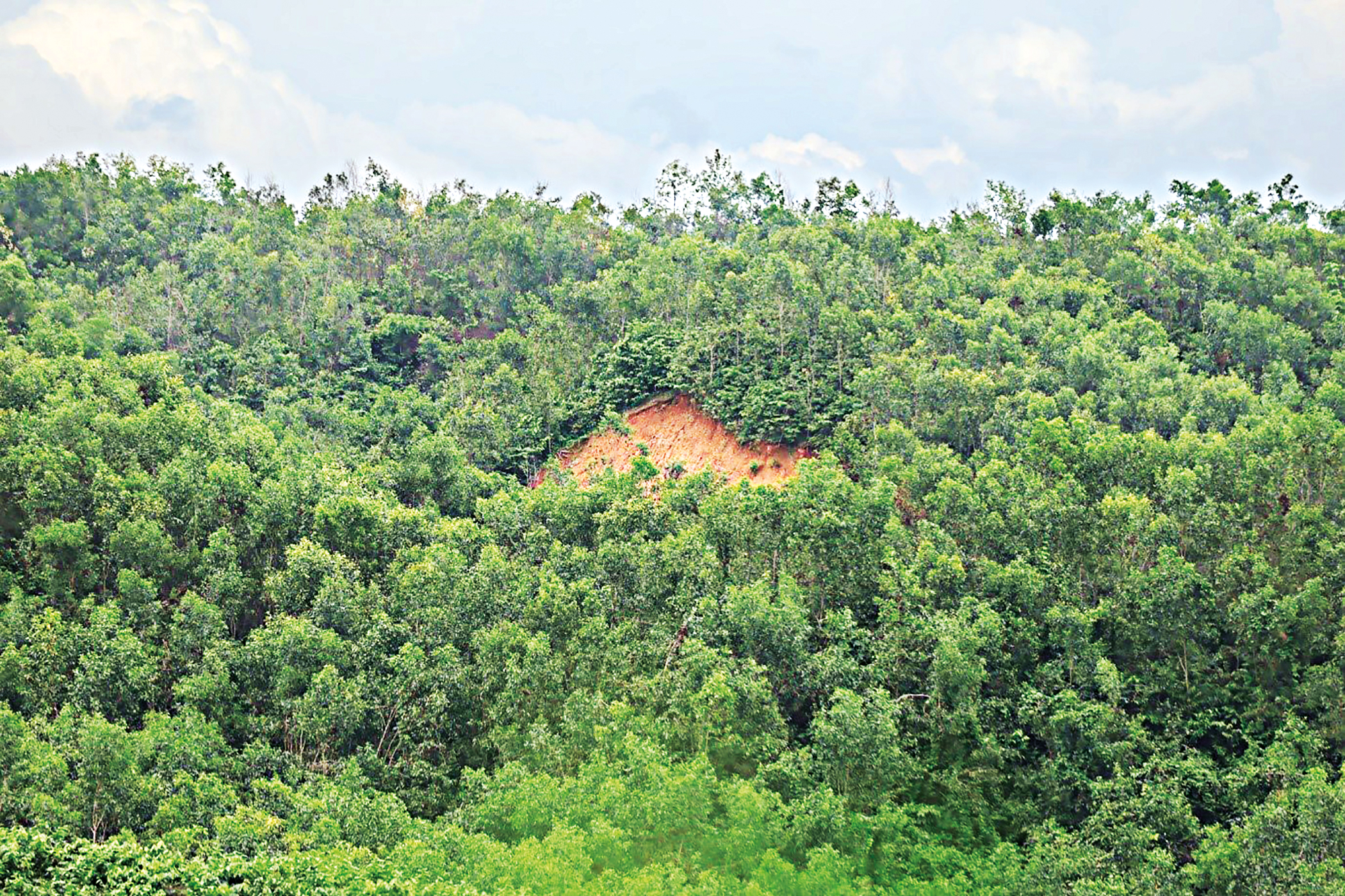
Though field researchers may see chharas as difficult obstacles, these waterways are actually thriving lifelines. They serve as essential ecological corridors, offering water, food, nesting sites and refuge to a remarkable variety of species. Because they open up the canopy, they create an "edge effect" that bathes both banks in direct sunlight, turning the stream borders into vibrant hotspots for sun-loving plants, small creatures and birds.
Along their margins, small warblers, babblers, sunbirds, flowerpeckers and bulbuls moved through the lower layers of the mixed evergreen forest. They searched among leaves and branches for insects, worms, larvae and spiders and occasionally took small fruits and berries.
The more closely we watched, the more the forest seemed to reveal itself.
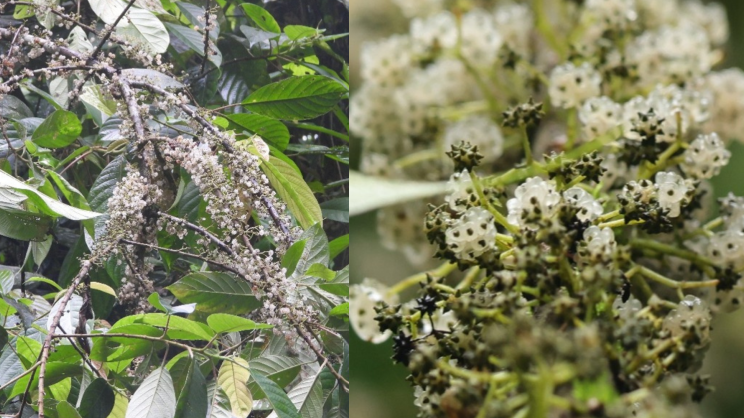
Some members of the team had a special ambition: to photograph the dwarf kingfisher. It is one of Bangladesh's smallest kingfishers and an elusive resident of forest streams. Its combination of size, colour and behaviour makes it irresistible to birdwatchers and photographers.
We eventually encountered a pair. For a few moments, the tiny birds appeared beside the chhara before disappearing again. Photographers can become slightly irrational when pursuing a dwarf kingfisher. We tried not to. For once, simply seeing them was enough.
Not far from where the kingfishers had appeared, a member of the butterfly team spotted a bird's nest containing three colourful eggs.
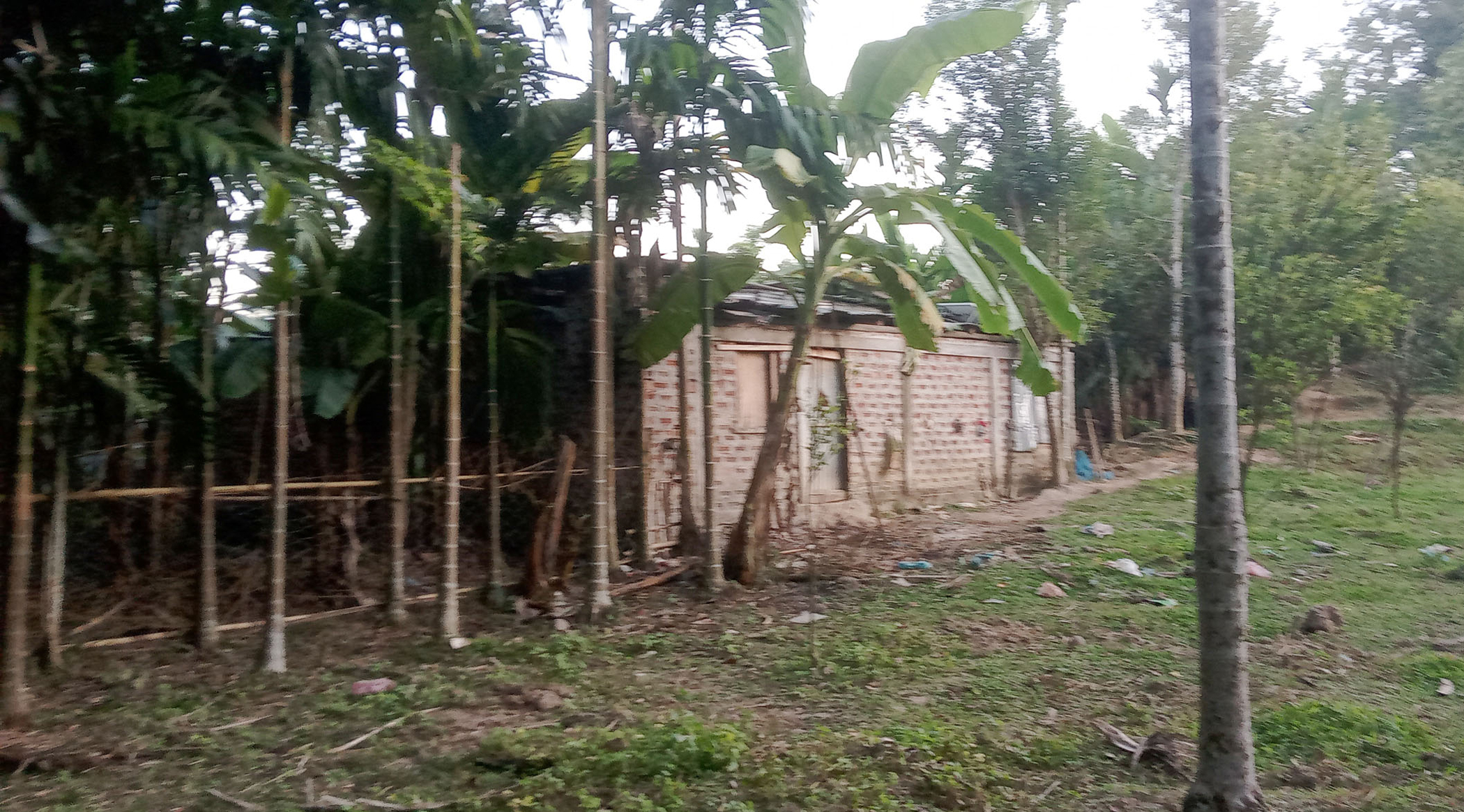
Two members of the survey team remained behind, hoping to document the nesting bird and, at the same time, watch the stream in case the kingfishers returned. The rest of us continued along the chhara.
Eventually, we reached a remarkable little landscape where three channels of the stream converged, with a small island separating them. It became our lunch stop. We sat down with our packed, dry food while the butterfly group continued its energetic work nearby. The forest around us was anything but quiet.
Water moved over stones. Birds called from the canopy. Insects moved through the vegetation. Somewhere nearby, the kingfishers might still have been fishing. For a few minutes, the lunch break felt less like a break and more like being inside a living natural history documentary.
The parents finally appear
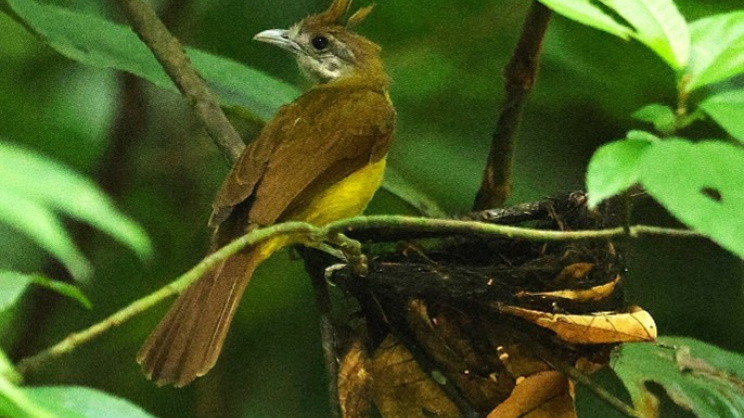
On the return journey, we finally solved the mystery of the nest. The owners were a pair of white-browed bulbuls. Their neat, cup-shaped nest had been built about three metres above the ground on a small tree overhanging the chhara.
We waited quietly for the adults to return. Eventually, we obtained the documentary photographs we needed. Then we left. The birds could return to their ordinary business. That is an important principle in wildlife photography and field research: the photograph should never be more important than the animal.
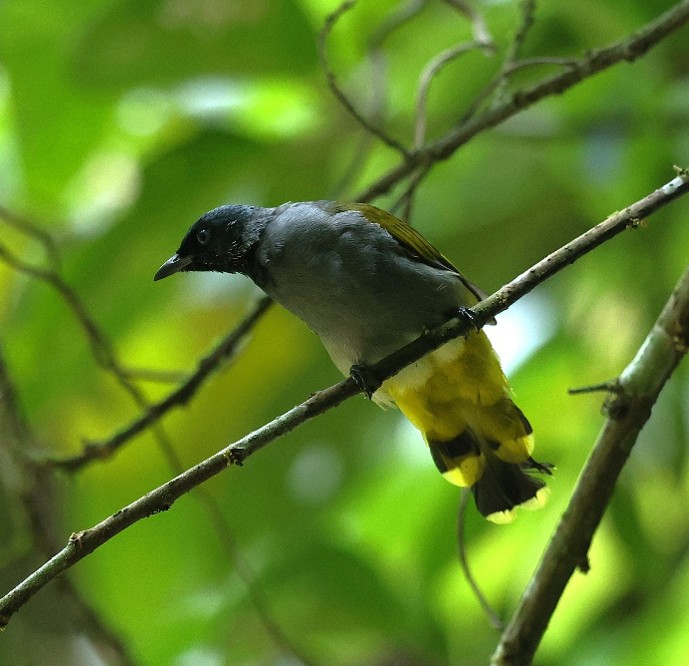
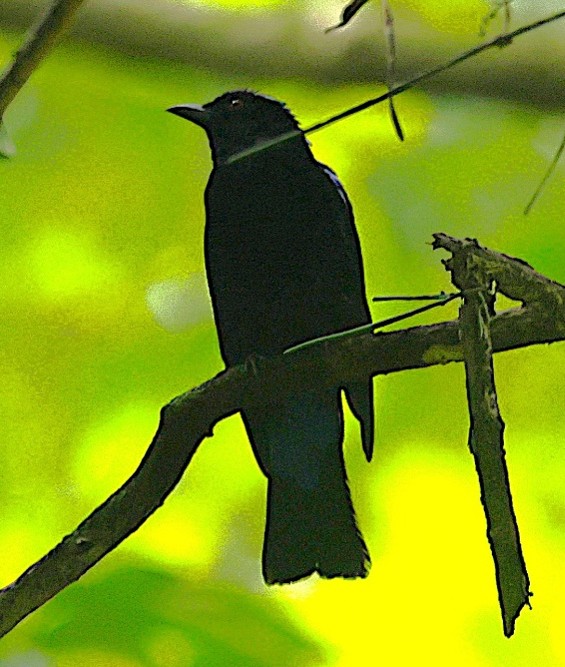
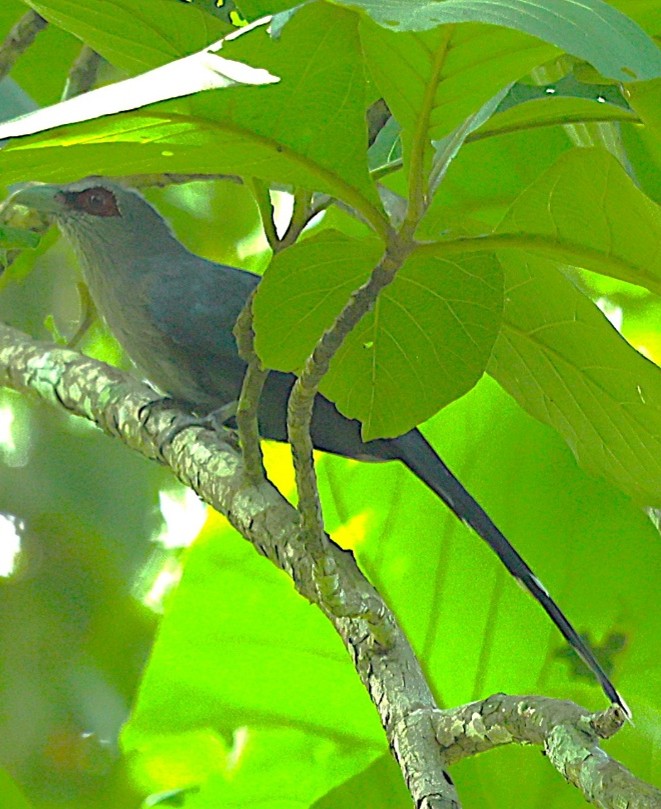
Near the end of our journey, we encountered one of those scenes that makes forest fieldwork so rewarding: a mixed flock of birds ranging from a tiny tailorbird to a shikra, whistling thrush and green-billed malkoha. At first glance, the combination seemed unlikely. What did these birds have in common? Obviously, it was food.
The flock was moving through the forest, hunting insects, spiders and larvae at different levels of vegetation, from near the ground to the canopy.
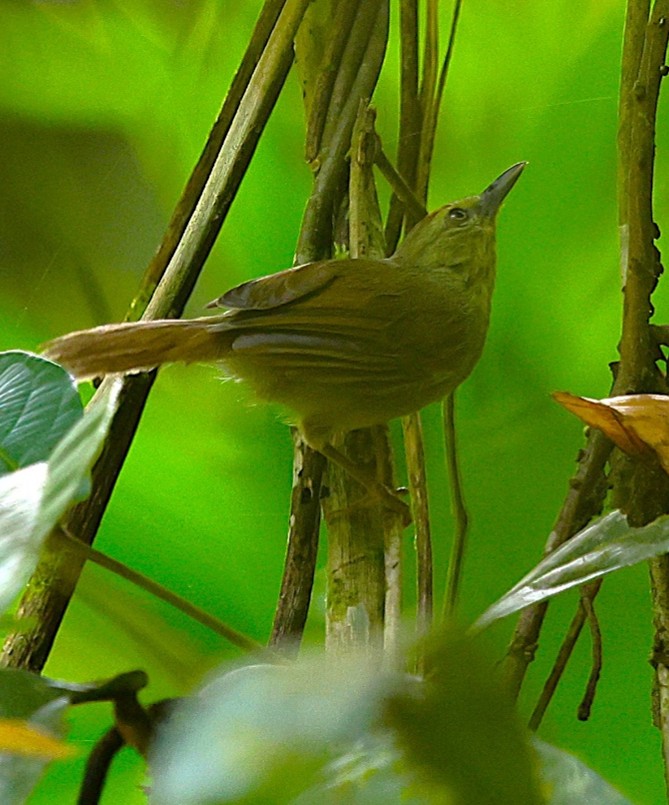
Mixed-species feeding flocks are among the most fascinating phenomena of tropical forests. Birds with little taxonomic relationship can temporarily associate because following the same feeding opportunities can make the search for food more productive. Predators and potential prey may even occur in the same general flock, each exploiting a different ecological niche. To a casual visitor, it might look like a random gathering.
To a field naturalist, it is a glimpse into the complex ecological machinery of the forest.
After sunset, Adampur changed again
We were out of the forest before the scheduled 5:00 pm return. But some of the more determined members of the reptile survey team were not finished. They returned after sunset, and Adampur rewarded them. A green pit viper was found. So were Bhamo frogs.
Animals that had remained invisible throughout the day suddenly emerged from the darkness. The experience offered a simple lesson: a forest is not one place. It is many places layered over one another, changing with the hour, the weather and the light.
The Adampur of the morning was not quite the same Adampur after sunset.
Overall, the expedition was highly successful.
We encountered birds, mammals, butterflies, moths, reptiles and amphibians. We documented a nesting bird, photographed rare and elusive species, collected selected butterfly specimens for scientific work and witnessed the remarkable ecological interactions that make the hill forests of northeastern Bangladesh so special.
Yet one observation refused to leave my mind: the tree ferns. Thirteen years earlier, they had been among the plants that gave Adampur its distinctive character. Now they appeared to have declined drastically. That should concern us.
A forest does not have to lose its most spectacular plant or animal before we recognise that something is changing. Biodiversity loss can begin quietly. A plant becomes less common. A frog disappears from a familiar breeding site. A bird becomes harder to find. A stream changes. A forest specialist retreats deeper into the remaining habitat. By the time we notice the disappearance of a large animal, the ecological changes may have been under way for years.
What will Adampur look like thirteen years from now? That is the question I carried out of the forest. I had returned after thirteen years expecting memories to come alive. They did, but not quite as I remembered them.
The hoolock gibbons were still calling from the canopy. Dwarf kingfishers still haunted the chharas. Bulbuls still nested above the water. Butterflies and moths continued to reveal an astonishing diversity of life. At night, frogs and vipers emerged from the shadows.
Adampur is still alive. But it is also changing.
The apparent decline of its tree ferns may be only one piece of a much larger ecological story. We need systematic monitoring to understand what is happening and why, and perhaps that is the real purpose of returning to a forest.
We should not visit merely to make a list of what we find. We should also remember what was there before. Because sometimes the most important wildlife record is not a new discovery. Records frequently track environmental loss, yet early detection can transform data from a eulogy into a conservation strategy.
Adampur waited thirteen years for me to return. I hope it will not have to wait another thirteen to be properly monitored.
Dr Reza Khan is a wildlife biologist and conservationist with over four decades of experience in wildlife research, zoo management, and biodiversity conservation in Bangladesh and the United Arab Emirates. He has worked extensively in wildlife rescue, sanctuary management, and community-based conservation initiatives.
Send your articles for Slow Reads to slowreads@thedailystar.net. Check out our submission guidelines for details.

More than refugees: How Rohingya youth are reclaiming their story
Behind every cup / The mental toll on women tea workers
From Shyamnagar to Kurigram: Women work, but where is the income?
Waiting for April: The other side of migration in the Sundarbans

Where have Bangladesh’s hilsa gone?

Lead poisoning in Bangladesh: A crisis ignored for too long

Who recycles Bangladesh’s garment waste?
Bangladesh running out of options on Rohingya crisis: Is there a way out?
Construction of the Sugandha-Kalatoli beach road / A grave threat to Cox’s Bazar’s sand dunes