Waiting for April: The other side of migration in the Sundarbans

In April, on a hot summer evening, I went to the weekly bazaar in Munshiganj with my local friend, Shamim. The road was crowded with temporary shops, bicycles and vans. Suddenly, I noticed several votvoti (motorised three-wheelers) stuck in the traffic. Every man was carrying a backpack on his lap. I had not seen this before. “Who are these people?” I asked Shamim. “Our people,” he replied, looking at them. “They are returning from the brickfields. They have been away for six months.”
One votvoti passed very close to me. The men looked very dusty and tired, but they were chatting loudly, laughing, and some of them were smoking bidi. Shamim told me that, over the next few days, they would gather at tea stalls, hotels and salons, enthusiastically announcing their arrival in the locality. Watching these men return home suddenly reminded me of something Shusila, a woman in her 40s from one of the villages in the Sundarbans, had told me several months earlier: “Dada, you will find me smiling in April when they are back home.”
At many points during my year-long dissertation fieldwork among the forest-fringe communities of the Sundarbans in 2024/25, I discovered that some of the men, aged between 20 and 50, go to brickfields for six months each year as contract labourers. What is interesting to note is that the migration of men does not simply create a void in the households. Women run their households, but they also wait for their husbands. For the women, waiting is not simply the time between the departure and homecoming of their husbands. It is a way of organising work, care, authority and hope for the women who run the households.
The shrinking forest
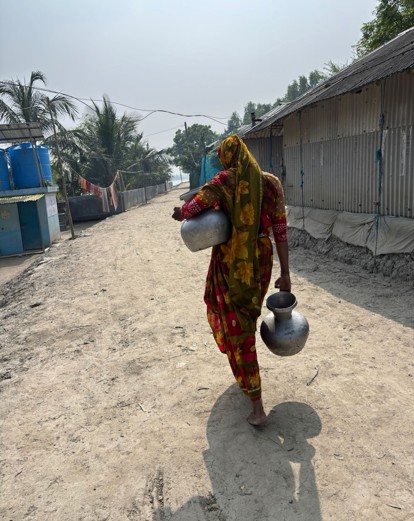
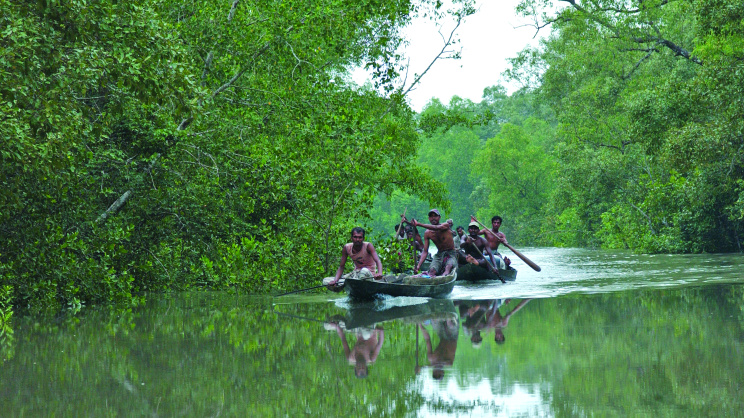
Many men, though not all, from the villages adjacent to the Sundarbans in Satkhira usually leave for the brickfields around October. They return home in early April after roughly six months. They travel to distant districts, where they have been recruited by the sardar through a labour contract for a brick-making season. Almost all of them were previously dependent on fishing, crabbing or collecting honey from the forest.
Their migration, though temporary, raises a question about what it means to be a bonojibi—literally, a person who makes a living from the forest. The term bonojibi is used for people whose livelihoods are connected to the Sundarbans. But the men who leave for the brickfields and other non-forest work spend more time outside the forest. Their sources of livelihood have shifted from the forest to wage labour. When they return home, they rarely enter the forest for any purpose.
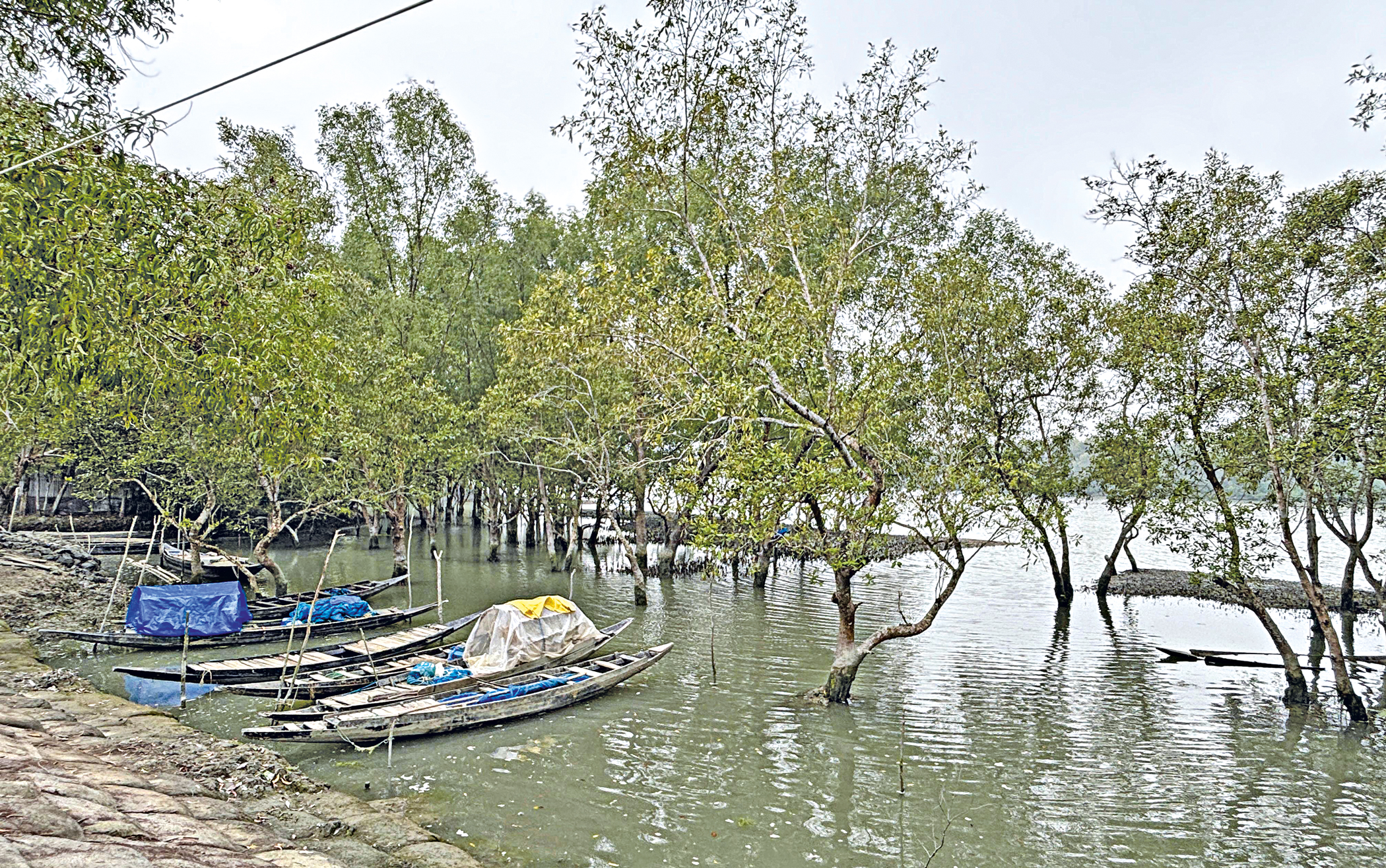
This shift cannot be understood simply as a result of individual ambition or a search for better or higher wages. Of course, some pull factors for this migration exist, but it is also connected with exclusionary conservation rules in the Sundarbans. The forest is governed through an expanding network of conservation rules, seasonal bans, pass permits and entry restrictions. Crab catching is prohibited for two months at the beginning of the year. Entry into the forest is strictly prohibited for three months during the monsoon to protect wildlife reproduction. No one is allowed to enter the Sanctuary, which comprises half of the Sundarbans.
The Forest Department justifies these measures as necessary to protect the forest and its wildlife, particularly the Royal Bengal tiger. However, livelihood opportunities outside the forest are very limited for people living in the Sundarbans. Landlessness, debt, a lack of agricultural labour due to shrimp farming, and low wages make it difficult for households to survive when the forest is enclosed. Seasonal migration to the brickfields becomes one solution for men. Men leave because their households need income, but their departure creates another kind of social arrangement organised around the labour of women who remain in the village.
Waiting for money
Nirmola, whom I came to know closely over the course of my fieldwork, shared her experience of life during the temporary absence of her husband in a way that I did not expect. She was in her early thirties and had completed her high school education before she got married. After their marriage, her husband joined a local NGO but, after two and a half years, quit the job before the birth of their first child. With the money she received from her husband via bKash, she bought a few goats for fattening, which she expected to sell at the next Eid market.
One afternoon, in her backyard, Nirmola Didi showed me her five goats, which she had tied to a bamboo pole. She had revived a goat shelter provided by a local NGO. But the Forest Department discouraged livestock rearing in the villages adjacent to the Sundarbans. Sometimes, people brought fresh leaves and branches when they returned from the forest to feed their livestock. But Nirmola said, “I buy feed from the market. That is why a local NGO has built me a goat shelter.” I asked her, “Where do you buy goat feed?” She mentioned that she visited the local bazaar every week, which was not very far away.
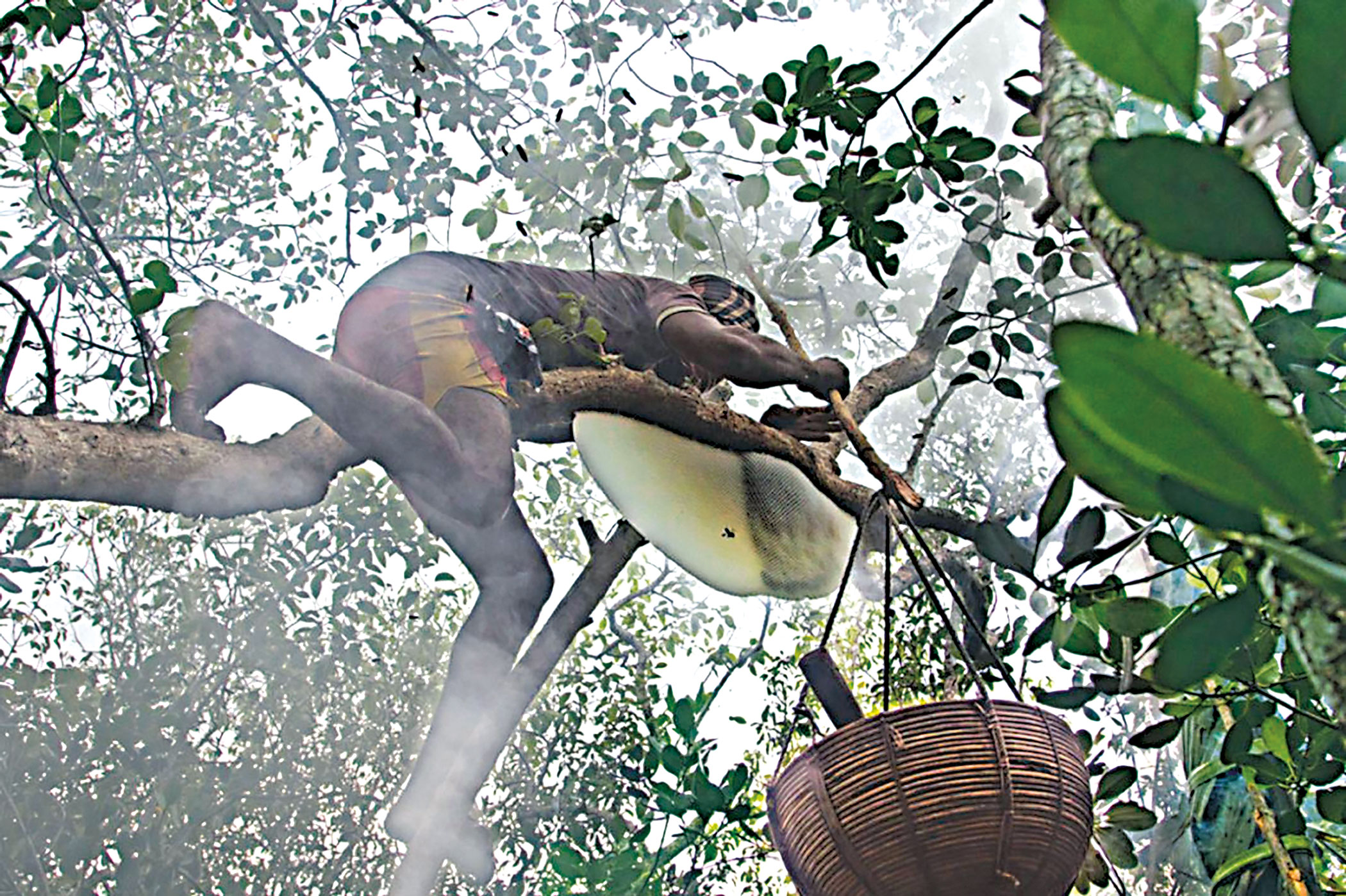
Nirmola Didi also showed me her Android mobile phone. “Everything is in here, Dada,” she said. “My daughter speaks to my husband almost every day. I wait for him to send the money through bKash. Now, life has become much easier.” I asked whether she felt sad because her husband was away. With a smile, she replied, “Not really. My daughter and I speak to him through video calls.” Her answer surprised me. I had asked the question with the assumption that her husband’s migration produced various negative impacts, but her answer complicated that assumption. I thought maybe she was a little shy, but she appeared to be a very confident woman.
The mobile phone reduced the physical distance, and remittances made her husband’s absence economically manageable. More importantly, her husband’s absence provided an opportunity for her to reorganise herself as the manager of her household without constantly negotiating with him. She told me that she missed her husband, but she also felt capable of managing life for herself and her daughter. She said, “I am strong, Dada. But I wait for him too.”
Of course, Nirmola’s waiting was productive. Her strength did not mean that she had stopped waiting for her husband. Nor did waiting make her helpless. She could miss her husband and wait for him, but still enjoy the practical freedom and mobility created by his absence. The household did not simply stop functioning until her husband returned. It carried on through Nirmola’s labour, planning and confidence.
The work of absence
Unlike Nirmola, Shushila had a bigger family, with three children and a father-in-law. Her husband and elder son went to the brickfields. Her youngest daughter had just started high school after finishing primary education. She had a TV in her house and ran a small tea stall in the village. Though her household income came from various sources, she did not face much economic pressure. Yet money did not relieve her of the practical burdens of everyday life.
When I asked her about her husband’s absence from the house for so long, she replied, “Men should be at home. There are many tasks which are meant for men.” At first, I understood it as a complaint about expectations, protection and responsibility. Certain activities, such as doing the shopping at the bazaar, taking elders to hospital and visiting children’s schools as guardians, were still understood as her husband’s responsibilities. “If my husband or son were here,” Shushila explained, “I would not need to go to the bazaar, take my father-in-law to the hospital or visit my daughter’s school.”
I saw that Shushila was more concerned about her daughter’s education. Later, I came to know that her daughter had obtained a scholarship in Class Five because of her very good results. She seemed optimistic about her daughter’s future, but she already had another concern. “My eldest son has been talking to a girl for a few years. This year, upon his return from the brickfield, I will get him married. And he will be separated.” The possibility of her son establishing a separate household appeared to trouble her. His marriage might bring her happiness, but it might also mean that another source of support would disappear.
Shushila was frustrated by both the care work and the double household burden caused by the absence of men from the house, though she received much higher remittances compared with other households. Shushila’s story reveals the limits of purely economic explanations of migration.
Financial support and practical support were not the same thing. But, like all the other women in the Sundarbans delta, Shushila too was eagerly waiting for April, when her husband and son would both return home. The following six months would be the happiest time for Shushila. “I will visit my parents’ house after they return. Dada, if you see me after April, you will find me always smiling.”
Shushila, Nirmola and a few other women I met in the Sundarbans delta, who navigate their lives during the temporary absence of their husbands from their households, did not experience waiting in a uniform way. Their experiences of waiting were shaped by the same seasonal pattern of migration, but the consequences differed according to household size, family relationships, income and expectations. A man leaves for the brickfield, but a woman remains to make his absence liveable. She waits for the money, waits for the phone call, waits for the return journey, and continues working throughout. This experience of waiting among women is sometimes missed in the migration story, which is predominantly seen in terms of men’s movement, their departure, remittances and homecoming.
Fahmid Al Zaid is an associate professor in the Department of Anthropology at the University of Dhaka and a PhD candidate at Durham University, UK.
Send your articles for Slow Reads to slowreads@thedailystar.net. Check out our submission guidelines for details.
Where have Bangladesh’s hilsa gone?

Lead poisoning in Bangladesh: A crisis ignored for too long
Who recycles Bangladesh’s garment waste?
Bangladesh running out of options on Rohingya crisis: Is there a way out?

Construction of the Sugandha-Kalatoli beach road / A grave threat to Cox’s Bazar’s sand dunes

Why have Nihar Koli and Samrat been sent back to their alleged abusers?
The reality of vocational training for Bangladeshi women

Can we save young Bangladeshis from deadly Mediterranean crossings?
Breastfeeding in Bangladesh: What is holding mothers back?