


Green growth in tough times
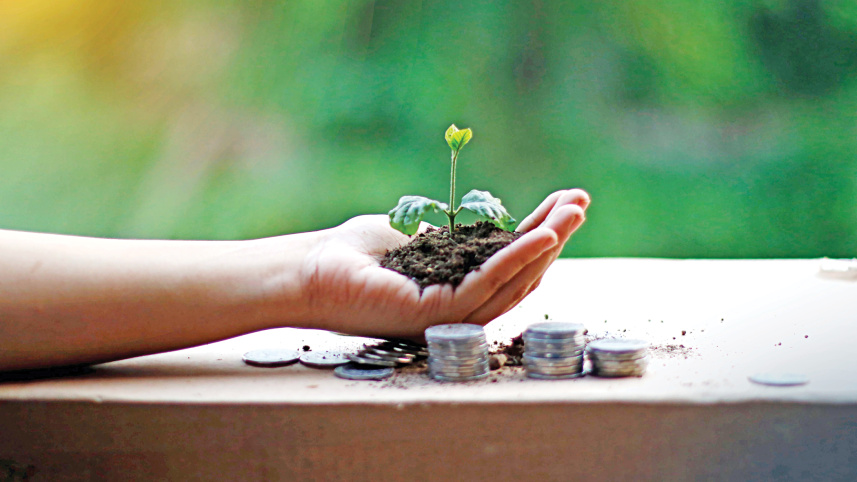
Bangladesh’s economy is currently navigating a difficult phase, with the International Monetary Fund (IMF) projecting growth of 3.5 per cent in the current fiscal year (2026-27) amid continued economic pressures. Discussing new investments can feel daunting when money is tight, and building a green economy usually requires significant funding that is hard to come by. Yet, for a climate-vulnerable country like Bangladesh, going green is not a luxury; it is an absolute necessity. For Bangladesh’s youth entering an uncertain job market, prioritising a green economy creates resilient, future-proof career pathways and entrepreneurial opportunities at a time when traditional sectors are struggling to generate employment. Aligning economic recovery with environmental resilience offers the surest way to shield the nation from future shocks and build long-term stability.
What Green Growth Really Means for Bangladesh

At its core, green growth means expanding the economy in ways that reduce environmental damage, conserve natural resources, and strengthen society against climate hazards. For Bangladesh, this is not just about abstract global goals; it translates directly into saving lives and safeguarding livelihoods. Green investments fund vital infrastructure, such as coastal flood defence, cyclone-resilient housing, and improved waste management systems. In agriculture, replacing traditional diesel-powered water pumps with solar-powered irrigation systems cuts down harmful carbon emissions while providing reliable, low-cost water to farmers in remote delta regions like char lands. Additionally, urban initiatives like rooftop solar power are gaining momentum through net-metering policies, proving that clean energy can power everyday life. Most importantly, this transition is critical for the nation’s youth, who stand to bear the heaviest burden of long-term climate risks. Green growth shifts young people from potential climate victims into active changemakers, replacing vulnerable economic models with future-proof green jobs and climate-focused entrepreneurship so they can build a secure, resilient future.
Pioneering Role in Green Finance
Government initiatives driven by Bangladesh Bank have prioritised green financing even during tight monetary cycles designed to tackle inflation. Latest data from Bangladesh Bank show that green finance disbursement stood at Tk 69.80 billion in the October-December quarter of 2025, up from Tk 67.76 billion in July-September. In contrast, sustainable finance disbursement climbed significantly to Tk 837.46 billion during the period, compared to Tk 732.92 billion in the previous quarter. This massive surge in green funding directly impacts the country’s youth by expanding credit access for young green entrepreneurs and creating sustainable employment opportunities across emerging eco-friendly industries.
To further support these efforts, Bangladesh Bank established a revolving refinance scheme amounting to Tk 200 crore from its own fund for solar energy, biogas, and ETP projects in 2009, and later increased the fund to Tk 400 crore in 2020. Since its inception, a total of Tk 742.3 crore has been disbursed until March 2023.
Private Sector Leadership and Eco-Friendly Manufacturing
The private sector has played a remarkable role in establishing a culture of climate resilience across the country by investing in eco-friendly practices. A success story is Bangladesh’s readymade garment industry, which now leads the world in sustainable manufacturing. The nation boasts 290 LEED-certified green factories, including 125 rated at the highest platinum level. Beyond garment factories, green housing complexes and sustainable agricultural ventures are emerging across the country.
Overcoming Obstacles and the Roadmap Ahead
Bangladesh has made commendable strides toward green growth and sustainability, supported by expanding green financing, progressive policy priorities, and growing environmental awareness across key sectors. Youth-led innovation plays a growing role in Bangladesh’s transition to sustainability. Initiatives like the ‘Our Planet Our Responsibility’ initiative, a five-year-long partnership between ActionAid Bangladesh The Daily Star, are dedicated to fostering youth-led climate solutions. By receiving an average of over 240 ideas each year, this platform clearly demonstrates that the youth of Bangladesh are not passive observers, but are proactively taking the initiative to solve pressing environmental problems and lead the transition toward a sustainable future. While young innovators are presenting actionable solutions in Green Business, Water Rights, and Energy Transition, many small and medium-sized entrepreneurs remain unaware of available green financing options. Emphasising this vital role of young changemakers, Farah Kabir, Country Director of ActionAid Bangladesh, noted, “Young people are not just our future leaders; they are leaders now. We must encourage and nurture their ideas and create pathways for them to turn those ideas into action.”
Despite promising progress, systemic barriers such as rigid loan terms, technical knowledge gaps, and weak ministry coordination continue to delay green projects. Overcoming these hurdles requires a clear, phased roadmap. In the short term, financial institutions must measure climate risks and offer technical support. In the medium term, policymakers should phase out fossil fuel subsidies and introduce carbon pricing. In the long term, strong public-private partnerships and media platforms connecting young entrepreneurs with funders will be vital to attract international capital. Tackling these obstacles head-on will allow Bangladesh to empower emerging leaders and transform its climate vulnerabilities into lasting sustainable prosperity.
 For all latest news, follow The Daily Star's Google News channel.
Comments