


Reducing Cash Dependency with Bangla QR
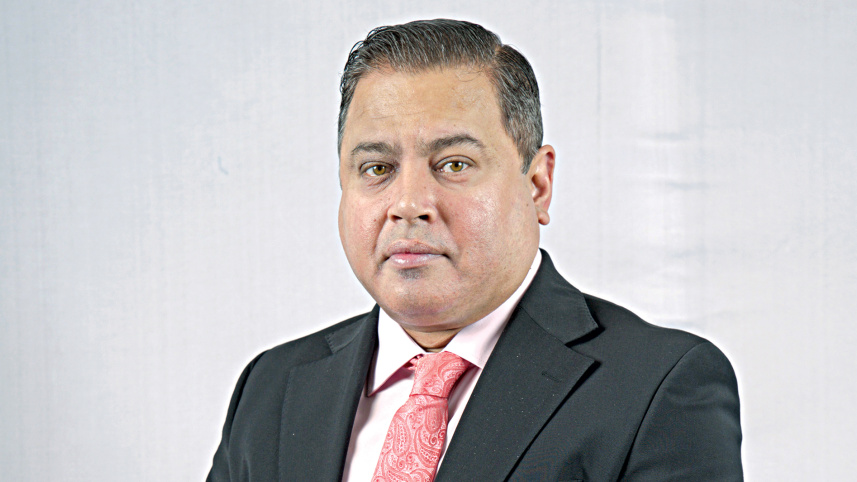
Faisal Rahman
Chief Executive Officer
Prime Bank PLC.

At Prime Bank, our digital strategy is closely aligned with Bangladesh’s vision of building a Smart, cashless economy and Bangla QR is a key pillar of that journey. We are embedding interoperable QR payments across our retail, SME and merchant banking offerings to ensure customers can transact seamlessly anytime, anywhere.
Transitioning to a cashless economy is a key step toward expanding financial inclusion and transparency in Bangladesh. Bangla QR supports this shift by providing an interoperable payment standard that brings small merchants and informal vendors into the formal banking system. In this interview, Faisal Rahman, Chief Executive Officer of Prime Bank PLC, discusses the significance of collaborative payment ecosystems and Prime Bank’s strategy to expand digital financial services nationwide.
The Daily Star (TDS): How do you perceive the role of Bangla QR in driving Bangladesh’s transition toward a truly cashless society?
Faisal Rahman (FR): I firmly believe that a cashless economy is no longer an option- it is a strategic imperative for Bangladesh’s future. Bangla QR is a transformative initiative that has the potential to accelerate Bangladesh’s journey toward a truly cashless and digitally inclusive economy. At Prime Bank, we see Bangla QR as a catalyst for expanding digital financial services, particularly among small businesses and underserved segments.
TDS: How are banks, MFS providers and fintech companies are collaborating to ensure seamless, cross-platform transactions for the end consumer?
FR: The future of digital payments depends on collaboration among banks, MFS providers, fintechs, and regulators. Shared infrastructure like Bangla QR and APIs break down payment silos, enabling secure, fast, and cost-effective transactions. At Prime Bank, we have embraced this collaborative approach by continuously enhancing our digital banking capabilities and partnering with key ecosystem players to deliver a frictionless customer experience.
TDS: What strategies are being deployed to simplify the merchant onboarding process for street vendors and neighbourhood grocers, and how does adopting Bangla QR help formalise their businesses?
FR: We believe that the success of a cashless economy depends on how easily small merchants can join the digital payment ecosystem. Street vendors and neighbourhood grocers need a simple, affordable and paper-light onboarding process. That is why we are leveraging digital KYC, streamlined account opening and instant Bangla QR issuance to enable merchants to start accepting digital payments with minimal documentation and turnaround time.
TDS: From an industry standpoint, what further policy support, tax incentives, or infrastructure developments are needed to accelerate the countrywide rollout?
FR: To accelerate the nationwide adoption of Bangla QR and digital payments, a coordinated approach involving policymakers, regulators, banks, fintechs and merchants is essential. Continued investment in reliable digital infrastructure, particularly high-speed internet connectivity in rural areas, will be critical to ensuring universal access. At the same time, targeted tax incentives for small merchants adopting digital payments, lower transaction costs and support for affordable QR-enabled acceptance devices can significantly encourage merchant onboarding.
 For all latest news, follow The Daily Star's Google News channel.
Comments