


Building future-ready graduates
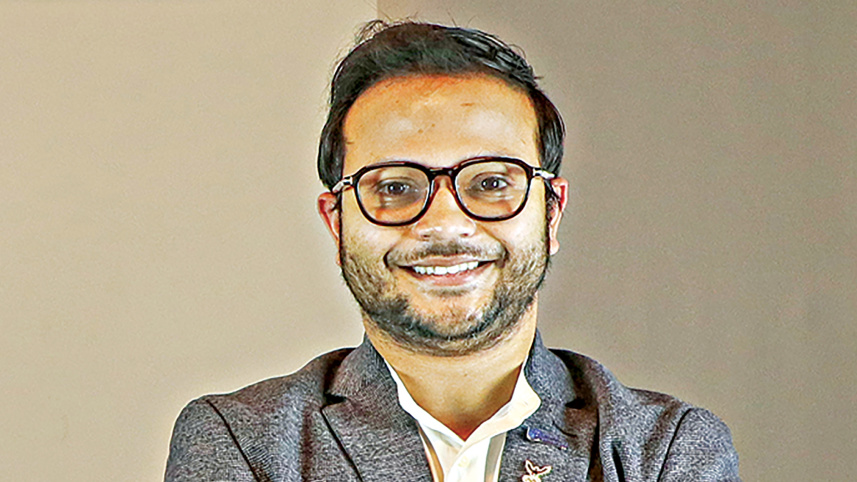
Abid Aziz
Member, Board of Trustees
Uttara University

AI should not be viewed as a threat but as a powerful tool. Universities must teach students to learn how to work with AI responsibly, ethically, and creatively. This decade is all about the artificial intelligence revolution.
As a second-generation business leader and edupreneur, Abid Aziz, a member of the Board of Trustees at Uttara University, is steering the institution toward a future defined by innovation. As a strategic planner accelerating national development through a forward-thinking approach, he discusses the university’s role in Bangladesh’s evolving economic landscape.
The Daily Star (TDS): Globally, higher education is undergoing significant transformation. As one of the early adopters, where do you see Uttara University positioning itself in this fast-changing global landscape?
Abid Aziz (AA): Higher education of the 21st century is ever evolving. Universities around the world are delivering equitable regional inclusivity, global accessibility, research, innovation, and strategic engagement across multiple sectors and industries. This is enabling the academia, government, industries, and the civil society to collaborate, and the height of development and progression is unprecedented. Bangladesh is not far behind. Operating on a nominal half-trillion-dollar GDP scale and positioned within the first quartile globally, we are the 36th largest economy. Universities in Bangladesh are now competing, and this is benefiting the student population. Being adaptive to technological changes, private universities are now the catalyst for an economic boom and transformational advancement. At Uttara University (UU), we are committed to creating an ecosystem where academic excellence, innovation, research, and industry engagement go hand in hand. Our vision is to produce graduates who are competent, skilled, and responsible citizens.
TDS: How do you want to accomplish that, and what distinguishes Uttara University from many other private universities in Bangladesh?
AA: Our institution was founded based on the principle of imparting quality education on a national scale since 2003. We equip students with skills to add value and contribute to the growth of our country. Because of this principle ingrained in our culture by the founder, we invest in quality teaching, infrastructure, digital transformation, and an ongoing programmatic validation through accreditation. A pool of nearly one hundred buses provides free transportation services daily. In the last two decades, we have strengthened our academic governance, modernized our infrastructure, transitioned to our state-of-the-art smart campus, and expanded opportunities for research, innovation, internationalisation, and experiential learning. We are also focusing on creating pathways for cross-cultural learning and international academic exposure. Collaborative research initiatives are regularly being explored to address critical environmental, economic, and societal challenges through multidisciplinary research by our distinguished faculty members. These reflect Uttara University’s commitment to aligning institutional policies, research agendas, and educational practices with internationally recognized sustainability standards and development frameworks.
TDS: Industry frequently raises concerns about the gap between academic learning and workplace expectations. How is Uttara University addressing this issue?
AA: Staying closely connected with industries, we make our curriculum and education relevant to the future. Our schools integrate practical learning, inward and outward internships, project-based assignments, real-world professional experience, and cross-sector business collaborations. One of our organizational developments lies in imbuing these into our curricula, which goes through continuous quality improvement measures. Our objective is to ensure that our students are valued globally. Our target has been to drive the country's innovation landscape, linking research findings with sectors like life sciences, advanced manufacturing, AI, sustainability, and green energy. Driven by our policies, we facilitate commercial spin-offs, encouraging patents, technological advancement, and a robust talent pipeline.
TDS: Artificial intelligence is reshaping education and the future of work. How should universities respond?
AA: Look, in my point of view, AI should not be viewed as a threat but as a powerful tool. Universities must teach students to learn how to work with AI responsibly, ethically, and creatively. This decade is all about the artificial intelligence revolution, and we already know that those who are not acquainted with this technology will be outdated and replaced. While technology can automate certain tasks, human qualities such as emotional intelligence, communication, critical thinking, ethical judgment, creativity, empathy, and leadership will become even more valuable. Our responsibility is to prepare students for this new reality by ensuring they are experts at ‘’prompting’’.
TDS: Research is increasingly becoming a benchmark for university excellence. What role does research play in Uttara University's strategy?
AA: Research is central to our long-term vision. A good part of our budget is increasingly allocated towards research every year. We regularly award and reward top researchers in our annual research award program. Universities should contribute to solving national and global challenges through knowledge creation and research findings. We continue to encourage interdisciplinary collaboration and student participation in research activities. We are working to create an environment where curiosity, innovation, and academic inquiry flourish while maintaining integrity in faculty commitment to the classroom and campus life.
TDS: Student well-being has become an important issue worldwide. How important is it for your institution?
AA: It is extremely important, and it is one of our top priorities. I view disruption to normalcy and human disorientation as collateral damage to the rapid tech-driven advancements. It is an increasingly alarming mental health issue. At UU, we have a dedicated mental health wing on campus. This wing is accountable to the community’s well-being and the confidentiality of students who visit the unit. Further initiatives include extracurricular engagement, student insurance (from 2027), leadership development, sports, cultural activities, and community service. These experiences help students develop resilience, confidence, and interpersonal skills that remain valuable throughout their lives in an increasingly complex world.
TDS: Bangladesh is striving to become a knowledge-driven economy. What role should universities play in achieving that vision?
AA: Universities are among the country's most important drivers. We are in charge of creating future leaders, generating research, fostering entrepreneurship, and supporting innovation. With support from the government, we can significantly contribute to sustainable economic growth and social progress. Universities sustain local economies through direct employment, research funding, and supplying labor markets with highly skilled knowledge workers. However, effectively aligning higher education with the economy requires intellect in leadership and a strategic, data-driven approach to ensure graduates are employable and institutions fulfill market demands. Coming from an entrepreneurial family background, with experience in pioneering educational initiatives for four and a half decades, I have grown up with specific intentions. Both formal and informal qualifications allow us to govern and navigate the information economy.
TDS: Internationalisation has become a priority for many higher education institutions. What does it mean for Uttara University?
AA: We have an extensive network of foreign partners across the world through which we strategically strive to strengthen our international presence, expand global partnerships, and continuously create new opportunities for students, faculty members, and researchers. To support our long-term vision of becoming a globally connected institution committed to sustainable development, we are integrating a global, intercultural dimension into our institutional teaching, research, culture, and service functions.
 For all latest news, follow The Daily Star's Google News channel.
 TDS: You are a young leader. Looking ahead, what are some of the strategic priorities you will be emphasising over the next five years?
AA: Currently, we are focusing on integrating AI-centric literacy in our programs and aligning our activities to the United Nations’ Sustainable Development Goals (SDGs) with hopes for a better planet. Strengthening academic quality, expanding research capacity, embracing digital innovation, deepening industry collaboration, increasing international partnerships, and creating a more vibrant learning environment are our thematic priorities. One of my most passionate plans includes digital transformation for HEIs at Uttara University. This impacts an institution’s operations at all levels: from governance to teaching and learning; from the content of curricula to knowledge production and research activities. This important transformation is creatively being adopted on a global scale by higher education institutions. Our university will also be reacting to, interacting with, and adapting to this change.
TDS: Finally, what message would you like to share with prospective students and their families?
Abid Aziz: Choosing a university is one of the most important decisions in a young person's life. I encourage students of all ages to look beyond rankings and focus on the quality of learning, opportunities for personal growth, quality of experience, and the values an institution instills. At Uttara University, our commitment is to help every student develop the knowledge, skills, and confidence needed to succeed in an increasingly complex world. We believe education should empower society to simultaneously build successful careers and make meaningful contributions to society.
Interview conducted by Tagabun Taharim Titun
Comments