


Building a Global Campus in Bangladesh
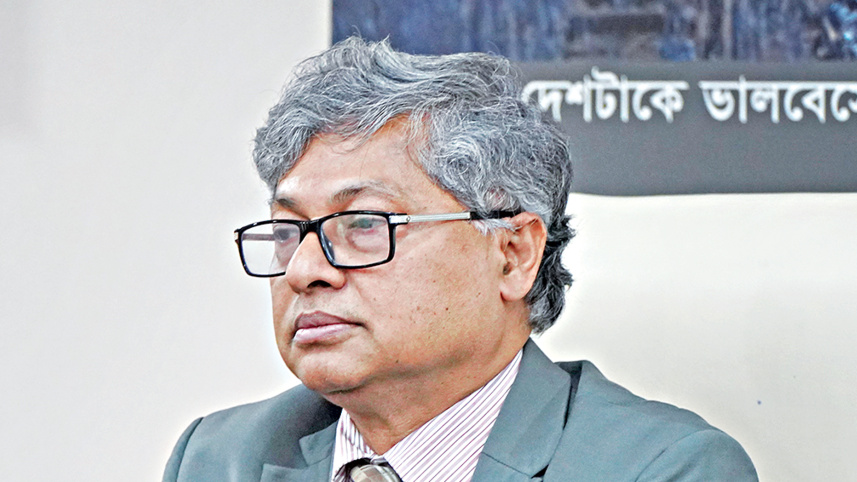
Professor Abdul Hannan Chowdhury,
PhD Vice Chancellor
North South University (NSU)

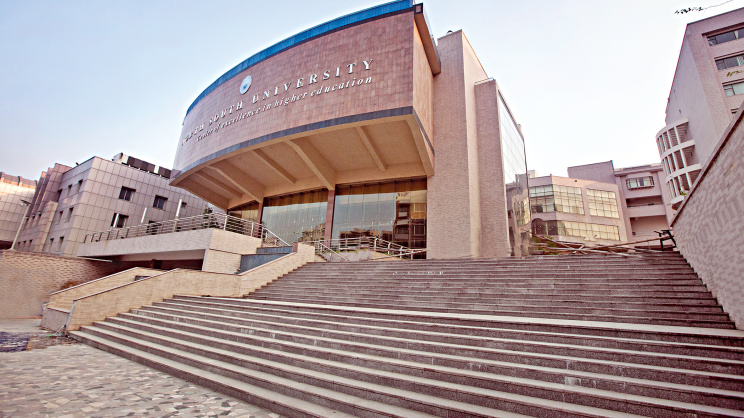
This campus in Bashundhara was once meant to be our final home, but our growth outpaced it. So, we are now building a state-of-the-art ‘vision campus’ in Purbachal, just fifteen minutes away. The net-zero campus is planned on 150 acres of land.
As Bangladesh’s universities compete on a global stage, they are pouring investment into research, internationalisation and entrepreneurship to turn graduates into innovators and employers, not just job seekers. Professor Abdul Hannan Chowdhury, PhD, Vice Chancellor of North South University (NSU), speaks with The Daily Star.
The Daily Star (TDS): NSU has already built one of the country’s first future-ready campuses. What philosophy is driving the university’s next chapter?
Prof. Abdul Hannan Chowdhury (AHC): As the country’s first private university, we proved that a tri-semester, credit-based American model could work in Bangladesh, and our graduates were welcomed for higher study and jobs across the world. This campus in Bashundhara was once meant to be our final home, but our growth outpaced it. So, we are now building a state-of-the-art ‘vision campus’ in Purbachal, just fifteen minutes away. The net-zero campus is planned on 150 acres of land.
TDS: Research has clearly become central to NSU. How has that grown?
AHC: About twelve years ago we decided to invest seriously in research. Our own annual grant for faculty has risen from around 3.5 crore taka before I joined to more than 12 crore this year, and we now win collaborative funding from universities such as Cambridge, King’s College, Yale, Johns Hopkins and Nottingham. NSU has established close to thirty research centres, including a Machine Intelligence Lab and a quantum computing centre, and our faculty are increasingly publishing in the world’s top journals.
TDS: You place great emphasis on internationalisation. What does that look like on the ground?
AHC: We now have faculty from more than twenty countries and students from over twenty others, so the campus is genuinely multicultural. Global companies — Chinese, Japanese and American — fund work here, and we recently opened a Google-supported cyber security clinic, the only one in Bangladesh. Languages matter too: our Confucius Institute turns twenty this year, having taught Chinese to some 30,000 Bangladeshis, and we are adding Russian, German and Korean. A single JICA programme helped 287 of our graduates find jobs in Japan.
TDS: You often say NSU wants to produce job creators, not only job seekers. How do you nurture that?
AHC: We want graduates who create jobs, not only fill them. Through NSU Startups Next we take students from an embryonic idea to a real business. We provide mentoring, pitching, even connecting them to venture capital. We recently sent a group of our startups to meet the government about young-entrepreneur funding. We were also the second university in Bangladesh to adopt an intellectual property policy, protecting what students and faculty invent. Our Center for Social Business, meanwhile, trains them to solve social problems profitably, in the spirit of the three-zero goals.
TDS: The Social Business Centre is integral to NSU. How does it shape what students learn?
AHC: Social business has been close to me from the start. I tell our business students that profit and the concentration of wealth cannot be the only goal. The real test is whether what you design solves a social problem while sustaining itself, reinvesting to grow rather than hoarding capital. Through our Social Business Centre, students train and pitch ventures built around social causes and join global conversations on the three-zero goals of ending poverty, unemployment and net carbon emissions. The idea was born in Bangladesh, and NSU has been a proud pioneer in taking it into the classroom and out to universities worldwide.
TDS: How does NSU approach sustainability?
AHC: We look at sustainability in two ways. The obvious one is the campus itself — we are cutting plastic, paper and electricity use on a compact site, and our next campus in Purbachal is designed as a net-zero, solar-powered, green 150-acre space. But sustainability is also about impact: a health study that leads to a new treatment, or students collecting 800 bags of blood and supporting flood victims, all address global goals too. This year we are publishing a full university sustainability report, a first in Bangladesh.
TDS: For parents and students choosing a university, what should they prioritise?
AHC: Look first at the people such as the strength and global experience of the faculty, since that is what truly defines a university. Then the tangible resources: enough specialised labs, a strong library, and modern systems like Canvas, the learning platform we are the only university in Bangladesh to use. But families should also weigh a university’s values. NSU is a generous institution. For over seventeen years, we have fully funded some 1,800 freedom fighters’ children, and each semester we support rural students, those in financial need and students affected by the July uprising. We are not a university only for the well-off.
Interview Conducted by Rumman Kalam.
 For all latest news, follow The Daily Star's Google News channel.
Comments