


If Ebola crosses borders, is Bangladesh prepared?

Ebola has never established itself in Bangladesh. But in an age of crowded airports and rapid international travel, distance offers less protection than it once did. The question is no longer whether a dangerous infection can cross continents, but how quickly a country can recognise and stop it.
That question feels especially urgent now. The Democratic Republic of the Congo is battling a major Ebola outbreak, with more than 5,200 cases reported by late August 2026 and deaths exceeding 2,500. The outbreak involves the Bundibugyo form of Ebola, for which there is currently no approved vaccine or specific treatment.

If an infected traveller arrived in Bangladesh, the first challenge would be detection. Ebola can initially resemble familiar illnesses, beginning with fever, weakness, headache and body aches before vomiting and diarrhoea may appear. A missed case in a busy hospital could expose family members, nurses, doctors and other patients.
Yet Ebola does not spread as easily as flu. It passes mainly through direct contact with the blood or other body fluids of someone who is ill, or contaminated materials. People do not spread Ebola before symptoms begin. This gives health authorities a valuable window to find patients, separate them safely and identify people who had close contact.
Is Bangladesh ready? The answer is: partly, but readiness cannot remain on paper. The country has experience managing major outbreaks, laboratories capable of investigating dangerous infections, and the Institute of Epidemiology, Disease Control and Research at the centre of disease monitoring. In July 2026, Bangladesh also launched a National International Health Regulations Authority to improve coordination during health emergencies.
However, Ebola would test weaknesses that became painfully familiar during COVID-19: crowded hospitals, uneven infection-control practices, shortages of protective equipment, delayed reporting, misinformation and fear. Even one poorly managed case could create panic far beyond the actual number of infections.
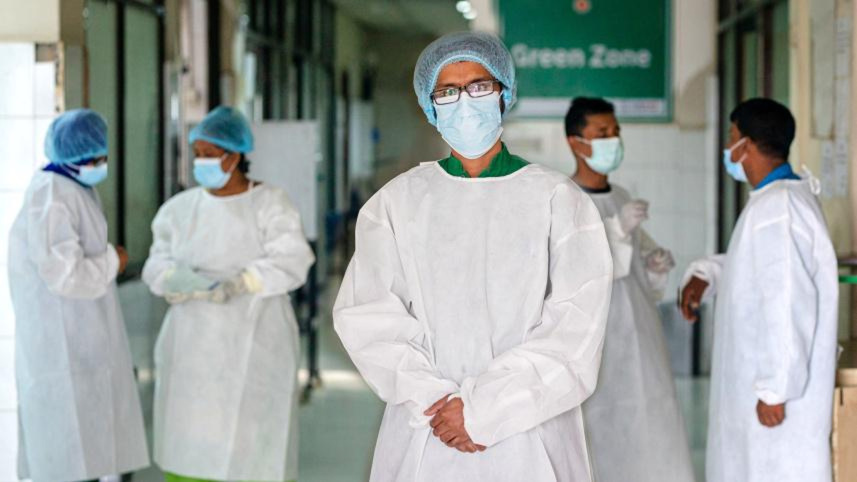
Preparation should therefore begin before the first alarm. Airport and hospital staff need clear instructions for recognising suspicious illness and asking about recent travel. Selected hospitals need prepared isolation areas, trained teams and adequate protective supplies. Fast testing, safe ambulance transport, careful handling of bodies and honest public communication would be essential.
Bangladesh does not need panic; it needs rehearsal. Ebola can be contained when cases are found early and communities cooperate. The most dangerous moment would not be when Ebola reaches the airport. It would be when the first warning signs are overlooked completely.
E-mail: sumaiya.khaled@thedailystar.net
 For all latest news, follow The Daily Star's Google News channel.
Comments