


Uncontrolled hypertension driving surge in strokes, heart disease in Bangladesh: Experts

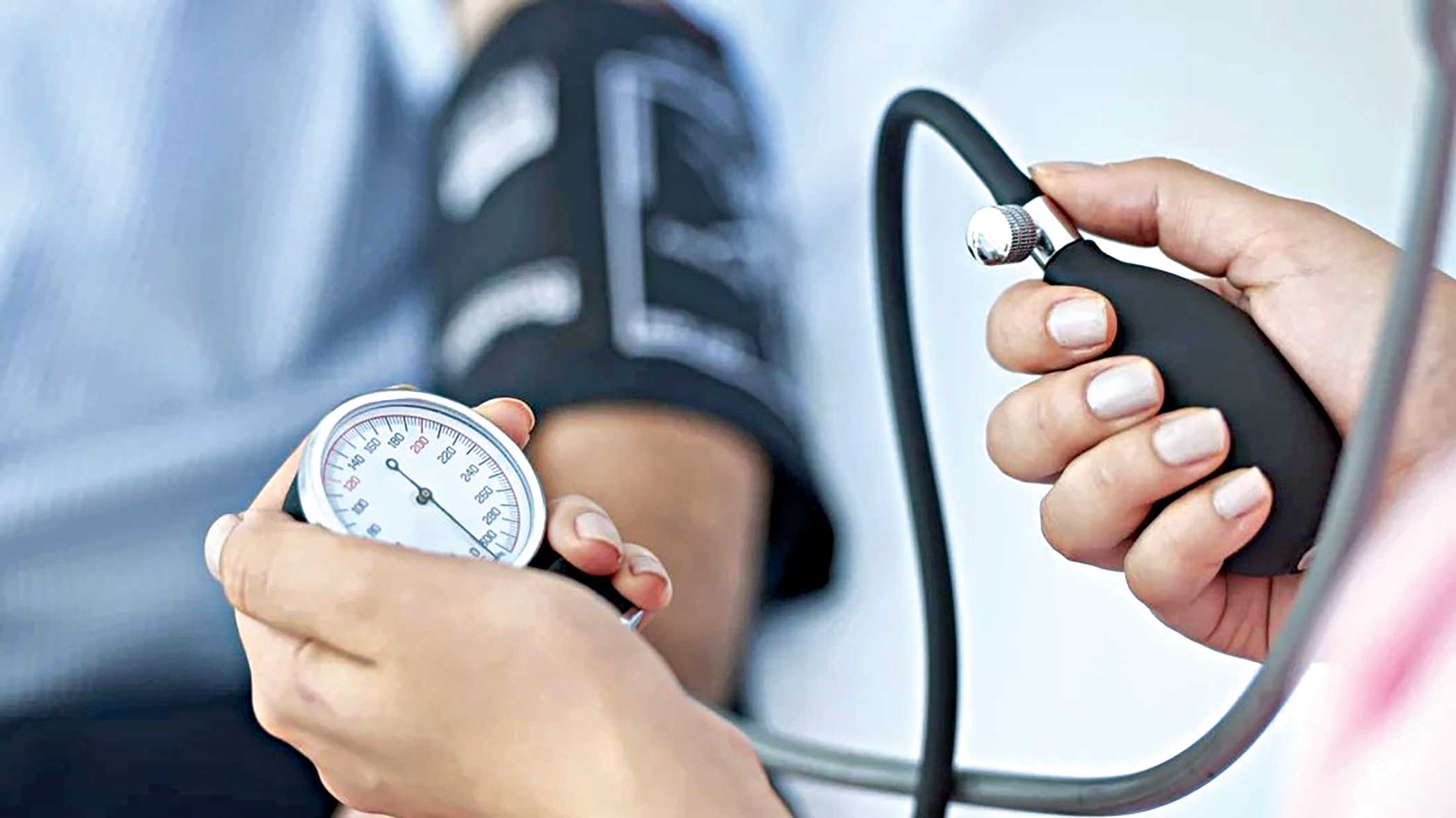
Hypertension has become a major public health threat in Bangladesh, driving rising cases of stroke, heart attack, kidney disease and other non-communicable illnesses, experts said at a seminar marking World Hypertension Day 2026.
“Yet high blood pressure can be controlled through regular blood pressure monitoring, healthy eating habits, physical activity, avoiding smoking, and proper medical treatment,” said Farzana Islam and Shahidul Haque, doctors of Bangladesh Medical University's Department of Public Health and Informatics.

They noted that around 1.4 billion people worldwide are living with hypertension, many of whom remain unaware of their condition.
Delivering the welcome address at the seminar at the university, Professor Mohammad Atiqul Haqu, dean of the Faculty of Preventive and Social Medicine and chairman of the Department of Public Health and Informatics, described hypertension as a “silent killer” linked to heart disease, stroke and kidney complications.
“To achieve Sustainable Development Goals (SDG) targets, we need timely policies, accessible medicines, regular screening, greater public awareness, and an integrated healthcare system,” he said.
Professor Md Abul Kalam Azad, pro-vice chancellor (administration) of the university, said erectile dysfunction (ED) should be treated as an early warning sign of cardiovascular disease and stroke rather than merely a sexual health issue.
Presenting findings from a study conducted in six villages of Dohar upazila in Dhaka district, he said non-communicable diseases such as hypertension and diabetes had become leading causes of death globally, while erectile dysfunction often served as an indicator of underlying vascular disease.
“Because of social stigma and embarrassment, many patients do not want to discuss erectile dysfunction openly. But this condition can appear three to five years before heart disease is diagnosed,” he said.
Explaining the medical basis, he said the penile artery is only 1–2 millimetres wide compared to 3–4 millimetres for coronary arteries, meaning vascular complications become visible earlier through erectile dysfunction.
“If we can identify ED early and intervene in time, future heart attacks or strokes can potentially be prevented,” he said.
The study, conducted among 384 married elderly men, found that 96.6 percent had some degree of ED, while 78.4 percent also suffered from hypertension.
“The risk of ED among diabetic patients is nearly four times higher, while hypertension patients face more than double the risk,” he said.
Md Mamunur Rashid, joint secretary of the Health Services Division under the Ministry of Health and Family Welfare, said around 1.4 billion people worldwide are suffering from hypertension, while nearly 77 percent lack access to screening or regular monitoring.
“Universal health coverage and easy access to medicines are crucial for controlling hypertension,” he said, adding that Bangladesh had adopted both whole-of-government and whole-of-society approaches to tackle the growing burden of hypertension and non-communicable diseases.
Dr Syed Zakir Hossain, former line director of the Non-Communicable Disease Control (NCDC) programme under the Directorate General of Health Services, said nearly 10 million die from hypertension every year.
Presenting a paper titled “Strengthening Hypertension Control in Bangladesh: The Role of NCD Corners and Digital Innovation,” he said hypertension affects about 28 percent of Bangladeshi adults, or nearly 22.8 million people.
He said non-communicable diseases account for 71 percent of all deaths in Bangladesh, while premature mortality from NCDs stands at 51 percent, higher than the global average of 41 percent.
“Despite the huge burden, only 5 percent of Bangladesh’s total health budget is currently allocated for NCD control,” he said, adding that every dollar invested in hypertension control could generate savings of up to 18 dollars through improved productivity.
 For all latest news, follow The Daily Star's Google News channel.
 Zakir said Bangladesh currently has 446 NCD corners nationwide, and more than 918,000 hypertension patients and 731,000 diabetes patients have been digitally registered.
“Through our digital system, blood pressure is now being successfully controlled among 58 percent of patients under treatment,” he said.
He added that the World Health Organization had recognised Bangladesh as a “success story” after the country’s hypertension control rate rose from 15 percent to 56 percent over the past six years.
Riad Arefin, deputy general manager of Essential Drugs Company Limited, said the state-owned company has been supplying medicines to all 446 NCD corners since fiscal year 2019–20 and requested advance demand forecasts to ensure uninterrupted supply.
Comments