


Advancing Fertility Care in Bangladesh

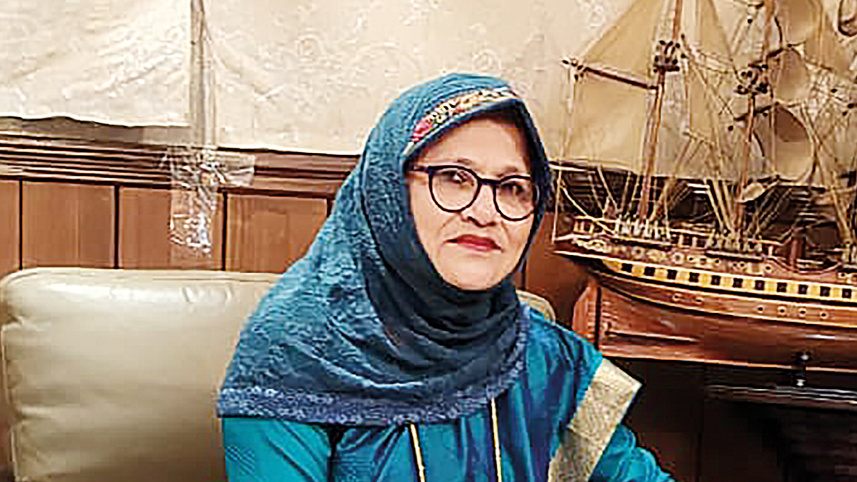
Prof. Dr Rashida Begum
President of FSSB
Chief Consultant at Infertility Care & Research Centre Ltd (ICRC)

In Bangladesh, most IVF centres are led by women. Beyond fertility, women are contributing across disciplines from surgery to cardiology. Their presence improves patient comfort and access.
As Bangladesh sees a steady rise in infertility cases alongside evolving expectations around parenthood, the need for specialised, patient-centred reproductive care has become more urgent than ever. Prof. Dr Rashida Begum speaks with The Daily Star about her journey into fertility medicine, the challenges within the healthcare system and her perspective on motherhood.
The Daily Star (TDS): What inspired you to specialise in a field so closely tied to motherhood and women’s health?
Dr Rashida Begum (RB): My father wanted me to become a doctor. Later, specialising in gynaecology was encouraged by my husband. However, choosing fertility as a subspecialty was entirely my decision. At that time, Bangladesh was far behind in modern fertility treatment. I realised that this field is clinical as well as scientific and artistic. Fertility treatment, especially assisted reproductive techniques, requires precision, patience and a deep understanding of biology. That combination of science and meticulous care drew me to this field.
TDS: How has being a mother influenced your perspective when working with women who are trying to conceive?
RB: In my practice, most patients come with the hope of becoming mothers rather than as mothers themselves. Personally, I see motherhood as part of a broader set of social and familial responsibilities that most women carry, regardless of their profession. Balancing professional life with family responsibilities is a constant reality for women in our context. I have tried to maintain that balance while ensuring my children grew up with discipline, education, and independence. That experience shapes how I approach patients—with patience, understanding, and a long-term perspective on their lives.
TDS: What role are female doctors playing in advancing healthcare, particularly in your field?
RB: Female doctors have made a substantial contribution, especially in gynaecology and fertility care. In Bangladesh, most IVF centres are led by women, which reflects their leadership in this specialised field. Beyond fertility, women are contributing across disciplines from surgery to cardiology. Their presence improves patient comfort and access, particularly for women seeking care. This has been a significant and positive transformation in our healthcare system.
TDS: What challenges do you see within the healthcare system today?
RB: One of the key challenges is the lack of adequate facilities and opportunities for trained specialists. Many doctors receive advanced training but lack the infrastructure or institutional support to apply their skills. This creates a gap between expertise and service delivery. While private centres can sometimes bridge this gap, the public healthcare system still requires significant improvement to ensure wider access to quality care.
TDS: What advice would you give to young women entering medicine?
RB: My advice is to focus on developing both knowledge and practical skills. Medicine requires continuous learning and hands-on experience. However, beyond individual effort, there must also be systemic support. Authorities need to create opportunities and provide the necessary infrastructure so that skilled doctors can contribute effectively. Supporting doctors ultimately means improving healthcare for the entire population.
TDS: How have you seen women’s participation in education and healthcare evolve over time?
RB: There has been significant progress. When I was a student, access to education for girls was limited. Today, opportunities have expanded considerably, and more women are entering higher education and professional fields. However, the quality of education remains a concern. While more students are graduating, not all are gaining the depth of knowledge required. At the same time, I see a strong commitment among many young doctors to develop themselves through training and continuous learning, which is encouraging.
TDS: What does Mother’s Day mean to you?
RB: Mother’s Day is not limited to a single occasion. For those raising children, every day is a form of Mother’s Day. However, having a dedicated day allows people to express feelings they may not always communicate. A simple message or gesture from children can mean a great deal to any mother. It is a meaningful tradition that celebrates that bond.
Interview conducted by Farhan Musfique
 For all latest news, follow The Daily Star's Google News channel.
Comments