


A journey from Patient Care to Parenting
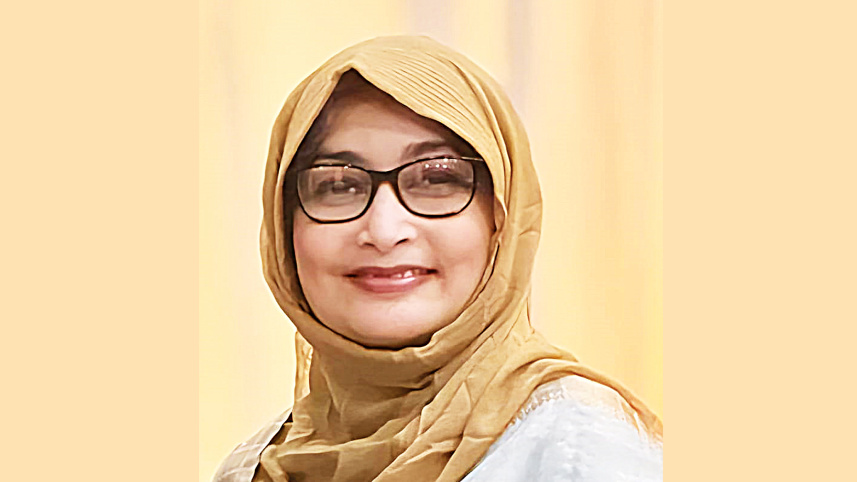
Dr Nusrat Mahmud
Senior Consultant
Division of Reproductive Endocrinology and Infertility (REI)
BIRDEM Women’s & Children Hospital

There have been times when professional frustrations, like a delayed promotion, would affect my mood. In a joint family, trying to keep everyone happy can be exhausting. Sometimes my children wouldn’t get the attention they deserved. I’ve had to learn to manage my reactions and ensure that I’m listening to my children’s needs.
There have been times when professional frustrations, like a delayed promotion, would affect my mood. In a joint family, trying to keep everyone happy can be exhausting. Sometimes my children wouldn’t get the attention they deserved. I’ve had to learn to manage my reactions and ensure that I’m listening to my children’s needs.
The Daily Star (TDS): How do you manage patients as a mother in the field of infertility and reproductive systems?
Dr Nusrat Mahmud (NM): I primarily deal with infertility and hormonal issues such as Polycystic Ovary Syndrome and Endometriosis. While the clinical side is essential, I spend a lot of time on psychological counselling. I have to boost their spirits and help them navigate societal pressures. I enjoy this work, which is why I chose to focus on this area over obstetrics. I’ve been doing this since I returned from Singapore with my master’s in 1998-99. Back then, there weren’t many specialists in this field.

TDS: What was your routine like when your children were younger, and how did you balance work and home life?
NM: My family has always been my primary focus, with work coming second. When my children were in school, I would make them breakfast and tiffin and drop them off myself. After work, I would pick them up from the bus stop. I made it a point to feed them and oversee their homework. I practised three to four days a week to ensure I had enough time for them. Living in a joint family with my in-laws and having a close bond with my parents and siblings also meant I had a lot of emotional and practical responsibilities.
TDS: How has being a mother changed the way you interact with your patients, especially those facing infertility or high-risk pregnancies?
NM: As a mother, I can empathise with my patients, but I also acknowledge that I can’t fully understand the pain of those who don’t have children. I try to counsel them that having a child isn’t the only goal in life and that the relationship between husband and wife is equally important. I share my own experiences where appropriate to help them through their challenges.
TDS: Have you ever felt guilty about having to leave your family for a medical emergency?
NM: I specialise in infertility so I don’t have many late-night emergencies. Those are more common in obstetrics. I chose this path partly for that reason, so I could have more predictable hours. If there is an emergency, our hospital system is well-equipped to handle it without me always having to be there in person.
TDS: How have you handled professional challenges while balancing your role as a mother?
NM: There have been times when professional frustrations, like a delayed promotion, would affect my mood at home. In a joint family, trying to keep everyone happy can be exhausting, and sometimes my children wouldn’t get the attention they deserved. I’ve had to learn to manage my reactions and ensure that I’m listening to my children’s needs, even when I’m stressed. It’s a constant balancing act, especially in a field where we often deal with people who are going through difficult times themselves. We have to make a conscious effort to find joy and spend quality time together as a family.
TDS: Do you have any suggestions for the betterment of doctors in your department?
NM: I think every hospital needs a daycare center for staff. I was lucky because my mother and in-laws lived in Dhaka, but many have no support. They have to leave kids with domestic help, who can’t always be trusted. Having a child nearby allows a mother to work without tension.
Interview conducted by Afrina Sultana.
 For all latest news, follow The Daily Star's Google News channel.
Comments