


Protecting the nucleus of our lives
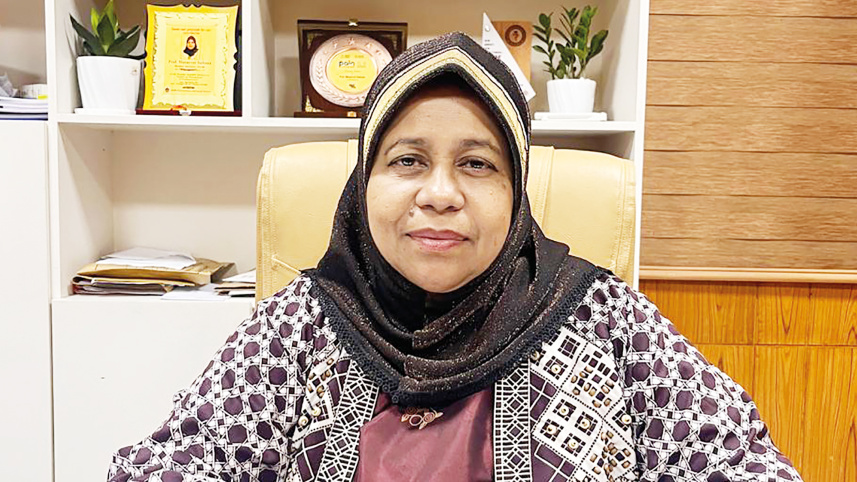
Prof. Dr Musarrat Sultana
Professor and Head
Department of Obstetrics and Gynaecology
Vice-Principal
Dhaka Medical College

Balancing my demanding career was a struggle. My daughter sacrificed much, even being brought to the hospital ward while sick, so I could care for her during my shift. These experiences taught me that a mother is truly irreplaceable and the “nucleus” of the family.
The Daily Star (TDS): What initially drew you to the field of Obstetrics and Gynaecology, and how has your professional mission evolved since experiencing motherhood yourself?
Dr Musarrat Sultana (MS): As a graduate of Dhaka Medical College, I was first drawn to this field during my internship. In the labour ward, I saw mothers arriving in very dangerous, distressed conditions. I realised that our prompt action could save their lives immediately. To me, a mother is the “nucleus” and the “lamp” of her family; everything revolves around her. When a mother’s life is saved, it feels like the light in her home has been turned back on. This inspired me to dedicate my career to making sure mothers return home healthy and smiling to their children. Since becoming a mother myself, I feel this responsibility even more deeply because I can now understand their pain from the inside. My professional mission has evolved into a super-specialisation in fistula surgery. For the last 20 years, I have focused on helping marginalised women who have become outcasts or been abandoned by their husbands and society due to their condition. Bringing a smile back to the faces of these women, who have suffered for so long, is the true reward and the greatest success of my life.
TDS: As a woman leader in women’s health, how are you working to improve maternal healthcare standards or innovate within your department?
MS: I chose to stay and serve my country for the last 27 years instead of moving abroad, dedicating my career to the mothers of Bangladesh. Now, as the General Secretary of the Obstetrical and Gynaecological Society of Bangladesh, I lead the planning and strategies to improve health services for the general population and especially for deprived mothers. Thanks to our society’s work at every level—from the districts to the grassroots—maternal mortality in Bangladesh is decreasing significantly. Our mission is to reach the Sustainable Development Goal of bringing maternal deaths down to double digits by 2030.

TDS: While you sacrifice so much to improve the lives of mothers and children, doctors often face significant hardships in their own lives, especially with poor housing and transportation during different postings. From your experience, what are the biggest challenges doctors face today regarding facilities and support?
MS: Although the top students in the country become doctors, we face a massive disparity compared to other government officials. In my own career, I have had to travel to remote postings by boat or on foot while officials from other departments were given cars. I have worked in offices with nothing but a broken chair and lived in places with no proper housing or belongings. It is often said that doctors don’t want to serve in villages, but the truth is that the necessary facilities, like safe housing and reliable transportation, are never provided for us. As a woman, I also feel the lack of security and the absence of protection laws to keep us safe from attacks. Because of these hardships and the lack of support, many bright students no longer want to study medicine. For our country to truly progress, we must provide doctors with equal facilities, better security, and an end to these unfair disparities.
Interview conducted by Adrin Sarwar
 For all latest news, follow The Daily Star's Google News channel.
Comments