


Budget should be realistic, focus on employment


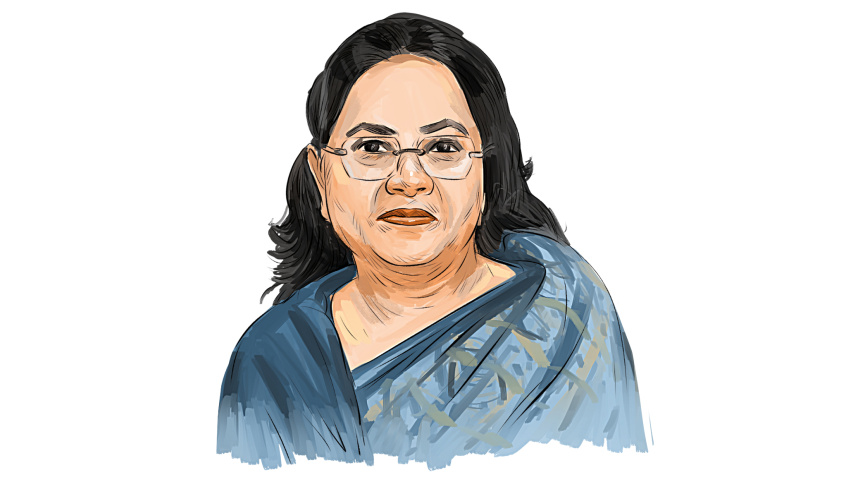
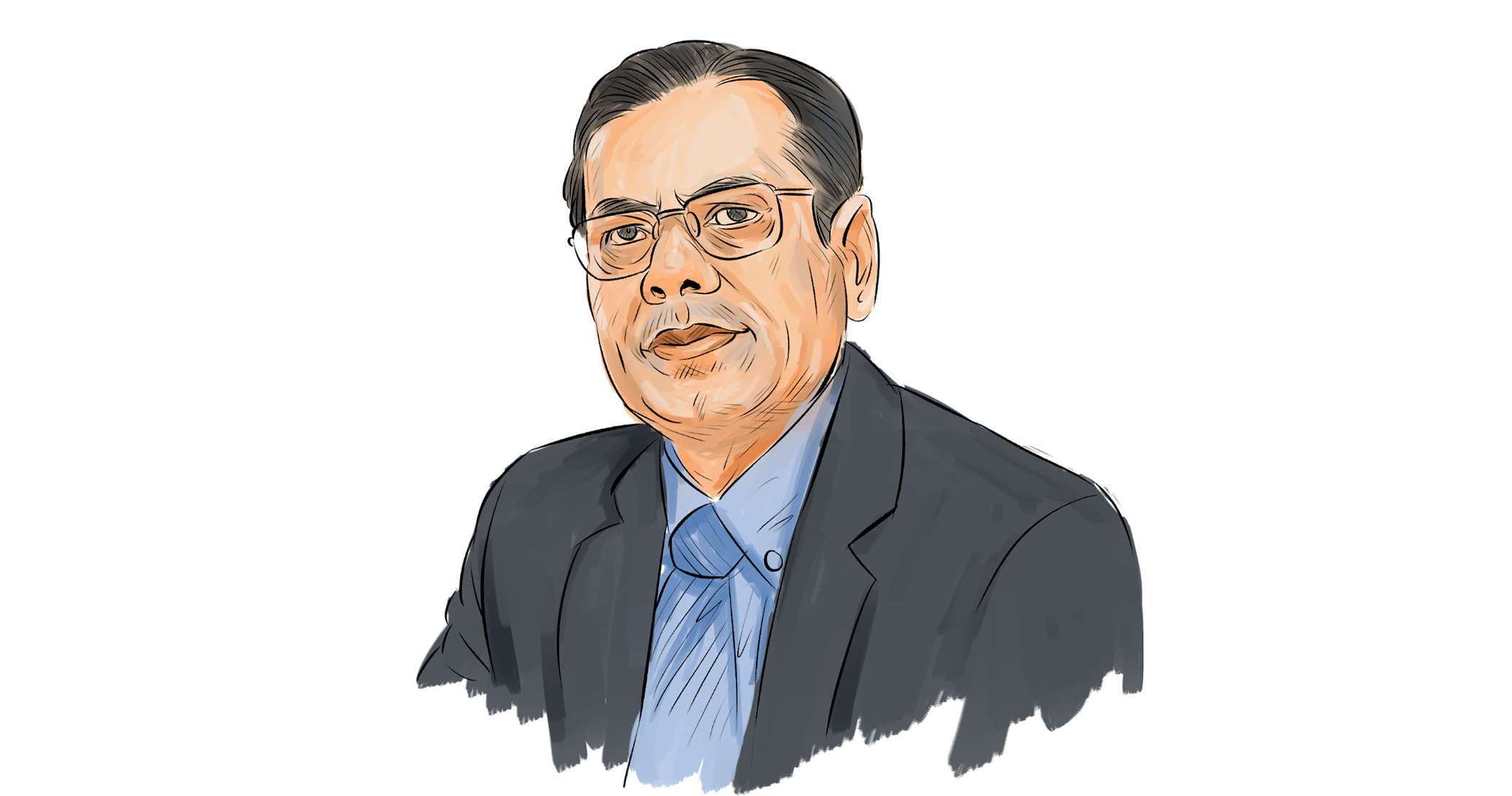
Sayema Haque Bidisha,
a professor of economics at Dhaka University, suggests strengthening small enterprises in rural areas

She cited a career preparedness programme recently launched at her university as an example of how universities can help students develop communication skills, interview techniques, and workplace readiness. “These are not expensive reforms,” she said. “Higher education institutions can build stronger industry linkages with relatively modest budgetary support.”
The upcoming national budget should focus on a realistic approach, aiming to bring inflation under control and create jobs by promoting private investment.
In an interview, Sayema Haque Bidisha, a professor at the economics department and also a former pro-vice-chancellor of Dhaka University, said one of the quickest ways to stimulate employment would be to strengthen small enterprises in rural Bangladesh through targeted policy support instead of costly incentives.
REVIVING RURAL SMES
The economist pointed to the struggles of rural entrepreneurs she met during field research in districts such as Kushtia and Tangail.
“We saw entrepreneurs producing goods and surviving through sheer personal effort, but many had little connection with institutional bodies meant to support them,” she said. “The problem is often not just only lack of financing, but also the lack of policy coordination, market linkage and access to information.”
Easier access to small loans, temporary interest waivers for micro-enterprises, and stronger links between entrepreneurs and supply chains could help sustain rural economies even if urban industrial expansion remains slow, the economist suggested.
BRIDGING THE SKILLS GAP
For job creation, the government should also focus on skills and a proper education system, she said, noting that Bangladesh’s education system suffers from a major disconnect with industry needs.
Many graduates leave universities without practical skills or career preparation.
She cited a career preparedness programme recently launched at her university as an example of how universities can help students develop communication skills, interview techniques, and workplace readiness.
“These are not expensive reforms,” she said. “Higher education institutions can build stronger industry linkages with relatively modest budgetary support.”
She urged universities and training institutes to focus more on industry-specific and career-oriented education rather than producing graduates for a narrow range of traditional jobs.
At the same time, she criticised Bangladesh’s broader training culture, saying many programmes remain overly certificate-focused without adequately connecting trainees to real employment opportunities.
“Training should not end with certificates,” she said. “It must be linked with internships, industries and actual job markets.”
WOMEN IN WORKFORCE
She identified caregiving, transport and agro-based industries as sectors with strong employment potential, particularly for women and semi-skilled workers.
 For all latest news, follow The Daily Star's Google News channel.
 Female labour force participation, she said, cannot improve without tackling structural barriers such as access to capital, market linkages and childcare support.
One of her strongest recommendations was the expansion of community-based daycare centres, particularly in urban low-income areas.
“A daycare centre can help one woman join the workforce while also creating employment for another woman running the service,” she said.
She also argued that Bangladesh needs to move beyond its heavy dependence on readymade garments for female employment and explore emerging sectors where women can play larger roles.
Even unconventional sectors such as transport could open new opportunities, she said, citing female drivers as an example of professions rarely discussed in Bangladesh.
A REALISTIC BUDGET
Throughout the interview, Bidisha repeatedly returned to one central point: Bangladesh’s next budget must avoid unrealistic promises and instead focus on practical, targeted interventions that deliver visible relief.
According to her, the biggest challenge facing the government remains revenue generation without increasing pressure on ordinary citizens already struggling with rising living costs.
“The real challenge is to expand direct taxation and bring more people into the tax net without putting additional burdens on lower and middle-income groups,” she said. “That has become even more important now because inflationary pressure is already rising due to fuel and other costs.”
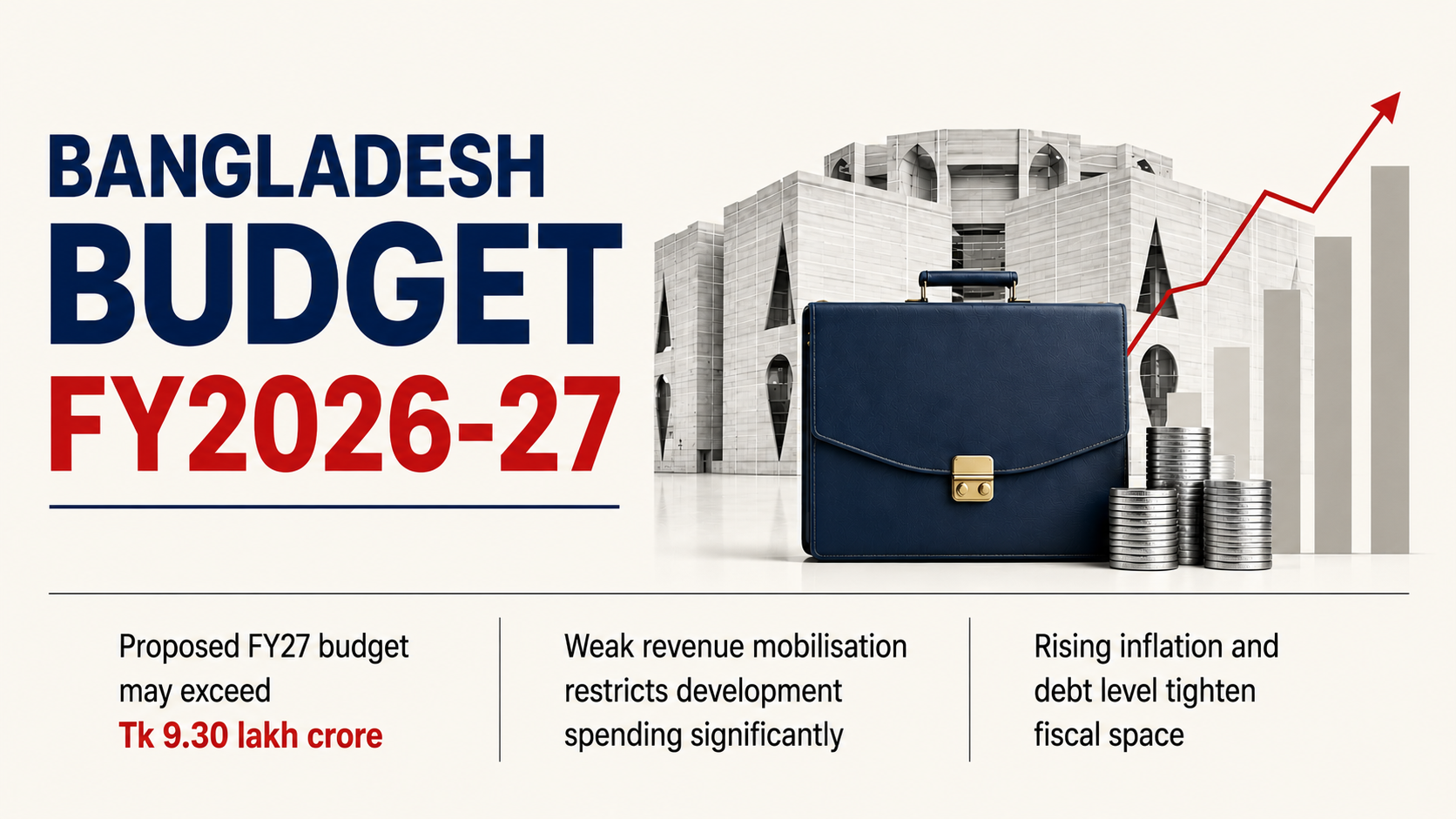
As Bangladesh prepares to unveil its first national budget under a BNP-led government in nearly 17 years, expectations are mounting over whether policymakers can strike a balance between economic stability and public relief.
Bidisha said the answer lies not in grand promises or expensive mega reforms, but in a “realistic budget” built around inflation control, employment generation and targeted policy support for ordinary people.
She argued that Bangladesh no longer has the fiscal space for overly ambitious spending plans. Weak revenue collection, persistent inflationary pressure, sluggish private investment and widening inequality have narrowed the government’s room to manoeuvre, she said.
“Our tax-GDP ratio has declined further, while revenue mobilisation has historically remained weak,” Bidisha said. “The government has to think carefully about priorities and austerity while protecting the most important sectors.”
According to her, inflation should remain the government’s top political and economic concern because the purchasing power of ordinary citizens ultimately determines public confidence in the economy.
“At the end of the day, people care about whether essential commodities remain within their reach,” she said, describing inflation as a political economy issue as much as a macroeconomic one.
REVIVING INVESTMENT AND JOBS
The challenge is more complex than simply tightening expenditure. Bangladesh must also revive private-sector investment and job creation at a time when high borrowing costs and macroeconomic uncertainty continue to discourage businesses.
“If private investment remains weak for a prolonged period, pressure will build on employment generation, industrial performance and inclusive growth,” she said.
Bidisha believes the government should focus on what she calls “low-hanging fruit” instead of waiting for large-scale reforms that may take years to implement.
TAX THE ULTRA-RICH
She also warned that Bangladesh’s widening inequality is becoming increasingly difficult to ignore. To reduce the income gap, she proposed stronger progressive taxation targeting ultra-wealthy individuals who often remain outside the effective tax net.
“For years, the burden has largely fallen on compliant taxpayers,” she said. “Meanwhile, many wealthy individuals remain outside the effective tax net.”
Digitalisation, she argued, could play a major role in expanding the tax base beyond Dhaka and Chattogram, where many affluent individuals in district towns remain outside formal taxation systems.
She even suggested offering temporary incentives or rebates to encourage first-time taxpayers to formally register and enter the tax structure.
WELFARE TARGETING
Another major concern for the professor is the design and implementation of social safety net programmes. She warned that Bangladesh’s welfare system still suffers from “inclusion and exclusion errors”, where many deserving people remain outside support schemes while others receive overlapping benefits.
The government’s plan to expand family cards to millions of households could face similar challenges unless it is integrated with existing welfare databases and programmes, she said.
“There has to be a holistic mapping system based on NID information, so policymakers know who is receiving which benefits,” she said. “Otherwise, the real target groups may still remain excluded.”
Bidisha also stressed that urban poverty deserves far greater policy attention. While rural households often retain some access to basic food and community support, slum dwellers in cities remain highly vulnerable to inflation and income shocks.
She called for stronger urban-focused social safety programmes targeting low-income communities in slums and informal settlements.
Comments