


Weak planning, not funds, derails development projects


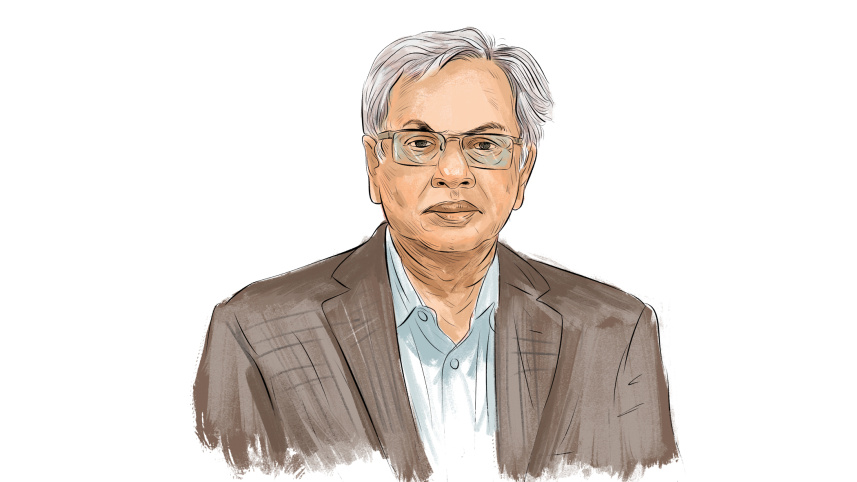
AK Enamul Haque,
director general of BIDS, calls for improving coordination,
prioritising outcomes over spending

“Projects involving land development or land purchases face the most delays,” Haque said, questioning why a land-scarce and densely populated country continues to approve large, land-intensive projects without adequate preparation. According to him, this shows a strategic miscalculation at the design stage of any project.
The country is not short of money for development projects. Instead, it is suffering from weak project planning, poor coordination and a culture that values expenditure over outcomes, according to AK Enamul Haque, director general (DG) of the Bangladesh Institute of Development Studies (BIDS).
He said complications over land acquisition are among the most visible causes of delays under the Annual Development Programme (ADP). But the problem, he said, is rooted in flawed project design.
“Projects involving land development or land purchases face the most delays,” Haque said, questioning why a land-scarce and densely populated country continues to approve large, land-intensive projects without adequate preparation.
According to him, this shows a strategic miscalculation at the design stage of any project.
The economist referred to a 200-bed hospital in Sylhet that was constructed years ago but remained non-operational because doctors, nurses and other staff were not appointed.
“A project does not mean only constructing a building. The objective of the development work must also be fulfilled,” he said.
The BIDS DG said delays in appointing project directors are often cited officially as a reason for setbacks. But he argued that this too reflects weak planning and coordination before implementation begins.
During the implementation, when projects are repeatedly revised, their objectives and activities also change, he added.
The economist called for higher private and public investment, including more effective government spending under the ADP, to restore momentum in the economy.
He said the Bangladesh economy is now going through a difficult period marked by slower growth, rising poverty, weak private investment and declining confidence in the banking sector. Restoring investor confidence, improving governance, and increasing productive investment should now be the priority.
Haque said rebuilding confidence is more urgent than pursuing aggressive monetary policy. “People are waiting for a clear direction,” he said.
He noted that many businesspeople are focused on protecting their assets or moving capital abroad because they do not have confidence in the domestic environment. Establishing the rule of law and ensuring a predictable business climate are essential.
“If investors do not feel safe, they will not invest.”
The BIDS DG commented that declining public confidence in banks poses a serious threat to the economy. Monetary policy alone cannot work if trust in financial institutions erodes.
“Many people are no longer willing to keep their savings in banks,” he said, referring to deposit growth turning negative in some banks.
Media reports about depositors struggling to withdraw savings have created public anxiety, he added.
“As long as confidence in the banking sector is not restored, monetary policy will remain ineffective.”
Haque said rising poverty is closely linked to slower economic growth. Bangladesh historically reduced poverty when growth rates were around 4.5 percent. With growth now below 4 percent, he said that higher poverty is “not abnormal”.
 For all latest news, follow The Daily Star's Google News channel.
 “When people do not get jobs, food insecurity rises. That is the natural consequence of weak growth,” he added.
He said the government’s central challenge is to revive growth through increased investment.
Ahead of the country’s scheduled graduation from the Least Developed Country (LDC) category in November this year, the economist said the transition itself is not the main concern, as Bangladesh will continue to enjoy several facilities for years.
However, without improvements in governance and investor confidence, the benefits of graduation may not materialise.
“If local investors do not invest, foreign investors will not come either,” he said.
He also criticised “mob justice” and political instability, saying that such conditions damage economic confidence.
Regarding fiscal policy, the BIDS chief said the tax system focuses too heavily on immediate revenue collection rather than long-term economic expansion. Excessive pressure on taxpayers and businesses could drive productive individuals and companies out of the country.
“We need an economic policy that helps the economy grow first. Tax revenues will rise naturally if the economy expands,” he said.
He called for greater involvement of the finance ministry and economic experts in shaping tax policy, instead of treating taxation purely as an administrative matter.
According to him, Bangladesh often applies similar tax structures across professions and industries without considering competitiveness. Highly skilled professionals, such as software engineers or architects, may relocate abroad if the burden becomes too high.
Haque also expressed concern about widening inequality between Dhaka and the rest of the country. He said urban development is overly concentrated in the capital, drawing opportunities, healthcare and education into one city.
“We think urbanisation means only improving Dhaka.”
He said that public services and investment need to be spread more evenly to reduce disparities. Otherwise, people outside the capital will continue to face disadvantages in healthcare, education and employment.
On environmental policy, Haque urged caution in pursuing green industrialisation. Export-oriented sectors, especially garments, face international pressure to adopt greener practices.
He, however, said that adopting costly technologies without considering local realities could raise production costs.
Bangladesh’s comparative advantage still lies in low-cost labour rather than capital-intensive technology. He questioned whether importing foreign green technologies is always appropriate.
“We should not assume technology only comes from the West.”
Using examples from renewable energy and local technologies, he said that Bangladesh should focus more on developing homegrown technological solutions instead of depending entirely on imported systems.
Haque said universities and engineers should be encouraged to develop technologies suited to the country’s economic and environmental realities.
Comments